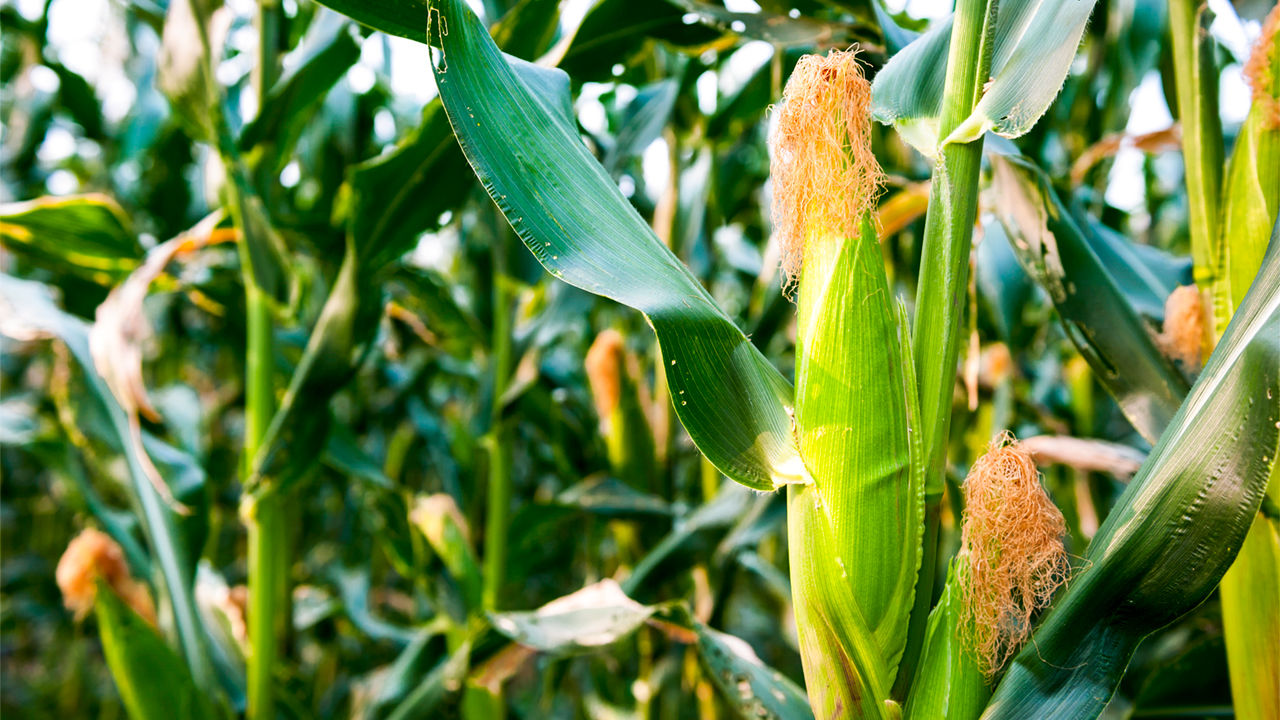
When the topic of climate change is mentioned and investigated, it is evident that many different populations will be impacted. However, it still seems difficult to clearly grasp how deeply rooted the impacts of climate change are within society. Therefore, when thinking about the topic in a quick manner, one might not realize just how many people will suffer the consequences. Being that I am from Pennsylvania, I see how important farms and agriculture is to our daily lives. Nevertheless, those who are from different regions of the United States, or even different countries, may not see the importance of agriculture and its impacts before their eyes on the daily. As mentioned in my first blog post, models show that wet regions will receive more precipitation, and dry areas will only become more dry. With this being said, agriculture will suffer in different ways; our planet’s diverse climate will bring about different outcomes to distinct regions.
Droughts
The words drought and flood are very daunting to those who rely on the agriculture industry for income and lifestyle. Farmers can choose to plant in high quality soil, use superior fertilizer, and maintain their crops well, but they have no control over weather patterns that may occur and cause all of their hard work to regress.
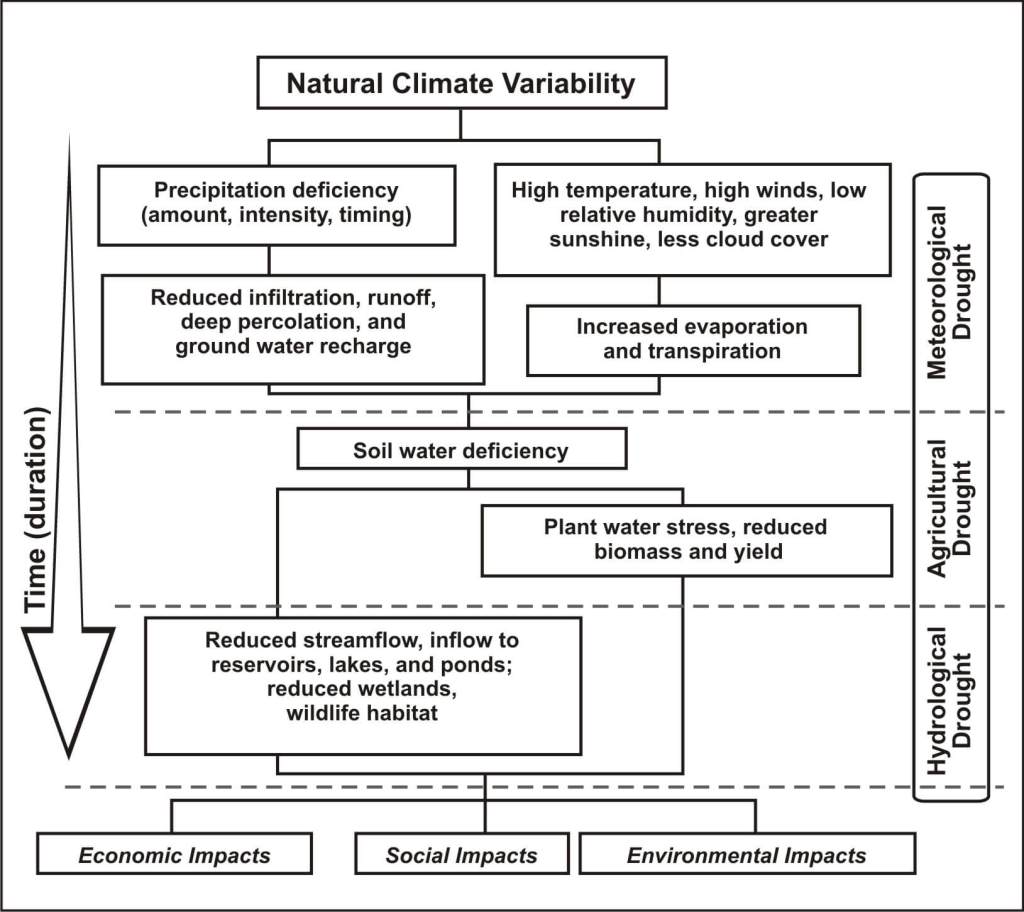
Droughts do not necessarily indicate a total lack of precipitation. To properly define this term, any departure from the average amount of precipitation for a given location is considered to be a drought. These guidelines are very region-specific due to the fact that some of Earth’s lands are prone to less precipitation than others (for example, a desert). Adding to this, there are four main types of droughts: meteorological drought, agricultural drought, hydrological drought, and socioeconomic drought (Click here to read more about the different types of droughts). Each type of drought serves as a catalyst for another type of drought, and they occur in the order listed above.
Now, let’s look at a scenario that shows how each drought leads to the next: a lack of precipitation occurs (meteorological drought), which causes soil to be water deficient and crops to fail (agricultural drought). From there, ground water, streams, and other sources of water become sparse (hydrological drought), and as a result, farmers will have a smaller outcome to market, which will cause them to have a shortage in regards to their income as well (socioeconomic drought).
This link allows you to look at drought conditions in your area by typing in a zip code. Click here to check it out!
Floods
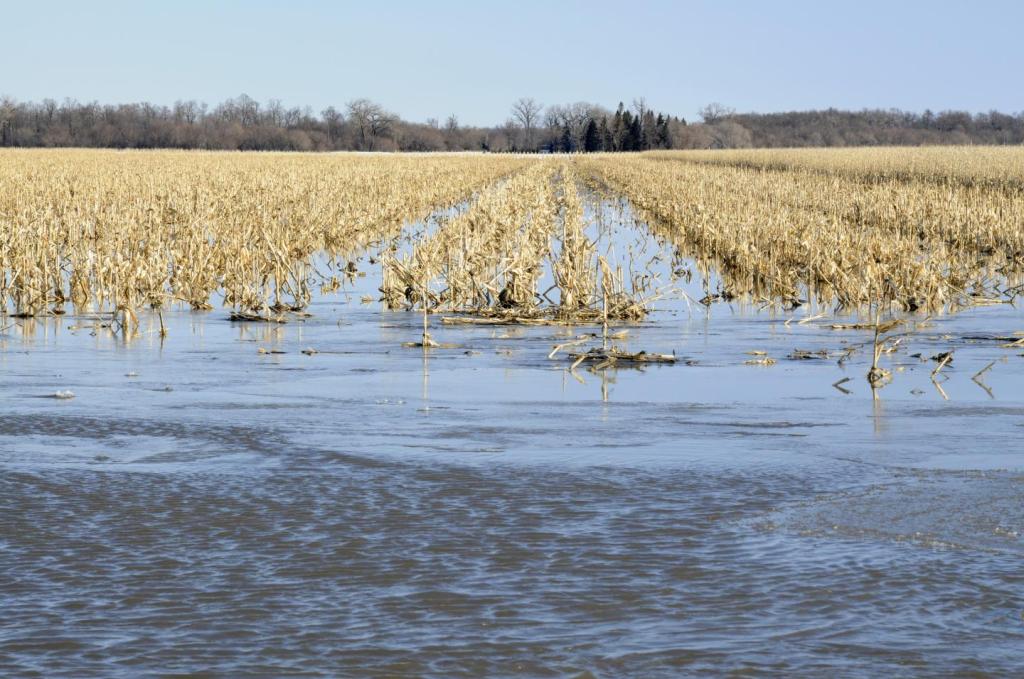
Looking in the opposite direction, excess precipitation can cause a lot of harm to the agriculture industry as well. We typically think of precipitation to be a great thing when it comes to hydrating crops or plants, but think about what happens when a plant receives too much water. Although a plant’s roots absorb the water and utilize it to promote growth, they also need air to breathe. Soil that contains too much moisture will eliminate air pockets for the plant to breathe. Additionally, a plant’s roots can contract diseases and end up rotting from receiving too much water (Click here to learn more).
Floods and excess precipitation do not only pose threats to plants. Animals face risks under these conditions as well. When floods occur, sanitation systems are likely to fail, and this increases the probability for water-borne illnesses to grow. Humankind is less likely to face this consequence when compared to animals. Because we are aware of the threats we face, we can make conscious decisions to prevent contracting such illnesses and risking our health, where animals do not know any better and will seek water when and where they can. Therefore, many animals within the agricultural industry can become ill and pass it along to humans easily.
How Does this Tie into our Economy?
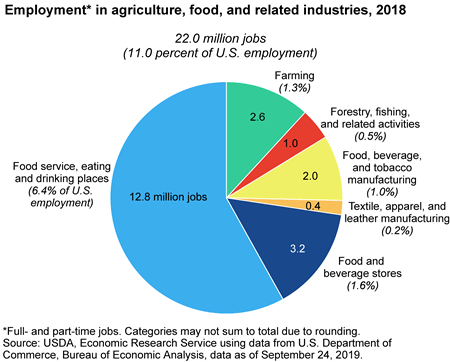
According to the United States Department of Agriculture (USDA), agriculture and its related industries provide employment to nearly 11% of our country’s population. A branch of the USDA is the Economic Research Service (ERS), and they are responsible for predicting trends among all aspects of agriculture in the United States. From that, they conduct extensive economic research to promote good decision making of public and private sectors (Click here for more information about the ERS). Additionally, they look at farming income and shortages we may face due to certain conditions such as some of the long term weather patterns we discussed above.
It is clear that farmers will face a shorter income if they are presented with a flood or drought any time during their season. However, this loss carries itself through to consumers. When supply does not meet demand, the prices of various goods will rise. So, as consumers, we will be required to spend more money during a shortage of any particular crop. Furthermore, other countries may aso face the impacts of a drought that occurs outside of their borders. For example, if a country imports crops from another country that is faced with a shortage, the importer will most definitely see an increase in cost.
Final Thoughts
Once again, we see yet another way that human-induced climate change impacts our economy and society as a whole. While it is difficult to think of all of the possible impacts of climate change, it is important that we remain alert and seek any opportunity we possibly can to educate ourselves on this matter. Another concept to keep in mind is to think of how others will be impacted by decisions we make as individuals on the long term. If we make ourselves more aware of how far our decisions truly go, we may be able to prevent some of the hardships that we have been encountering.
By ignorance and the mindset that individual decisions will not impact overall results, we are causing ourselves to become plagued with the negative results of climate change. Let’s educate ourselves and others, and in return, make better decisions for our planet, its wonders, and its people!
Signing off
-Shannon
 Global Climate Change and Society
This is so good. I love it I think that you are really good at writing and with science.
LikeLike
Haley,
Thank you greatly for taking the time to read my post and leave a comment! I appreciate your kind words so much! I hope you were able to learn something new through this piece! Stay safe and healthy!
LikeLike
This was a very good and informative report. I did not know there were 4 types of droughts. I like the like that explained them all. I also liked the link where you could enter you zip code and get information for any specific area. I also learned a lot from the section on flooding also. I never thought about the impact of animals drinking contaminated waters and the what the outcome of that could be. The part about prices going up because of shortages of didn’t kinds of crops in our country and other parts of the world were also interesting due to flooding or droughts.
LikeLike
Thank you for reading my blog post and leaving a comment! I was unaware of the multiple types of droughts until I presented a lecture covering floods and droughts last month in Global Climate Change. Floods are another concept where it is difficult to think of all of the small, detailed outcomes.
What the world is currently going through will have a massive impact on the economy, as everything is slowing down. Then, when virus clears up, prices will most likely drop to increase sales and help the economy until everything falls back into place!
LikeLike
It was very interesting to learn about the different types of draught. There is so much that ties in to climate change that people never think of when they hear the words climate change. A lot of people don’t believe in it including some of our leaders. I think they should educate themselves and agree that it is real before it’s to late to reverse the damage that it has done!
LikeLike
Marge,
I am glad you enjoyed this blog post! Furthermore, I’m glad that you were able to take something out of it and further your knowledge!
I agree with you that our leaders do need to take climate change and its impacts into account when making big decisions, and to be honest, on the daily basis as well! Great point!
LikeLike
Great article Shannon. I was quite surprised about the different droughts. The impact of climate change can severely hurt the farmers and consumers.
LikeLike
Missy,
Thank you for taking the time to read my blog post! I’m glad you enjoyed it and learned about the different types of droughts!
It’s interesting to see how one causes another. Stay healthy and safe!
LikeLike
Very informative and detailed article on how weather and humans affect farming and climate. And also points out how too much or too little precipitation affects farming. Keep up the good work.
LikeLike
Pap,
Thank you for reading my blog post! I’m glad that you enjoyed the content! I’m sure you were familiar with some of the content from gardening every year. Stay tuned for a blog about how rainforests are facing climate change and consequences from human decisions!
LikeLike