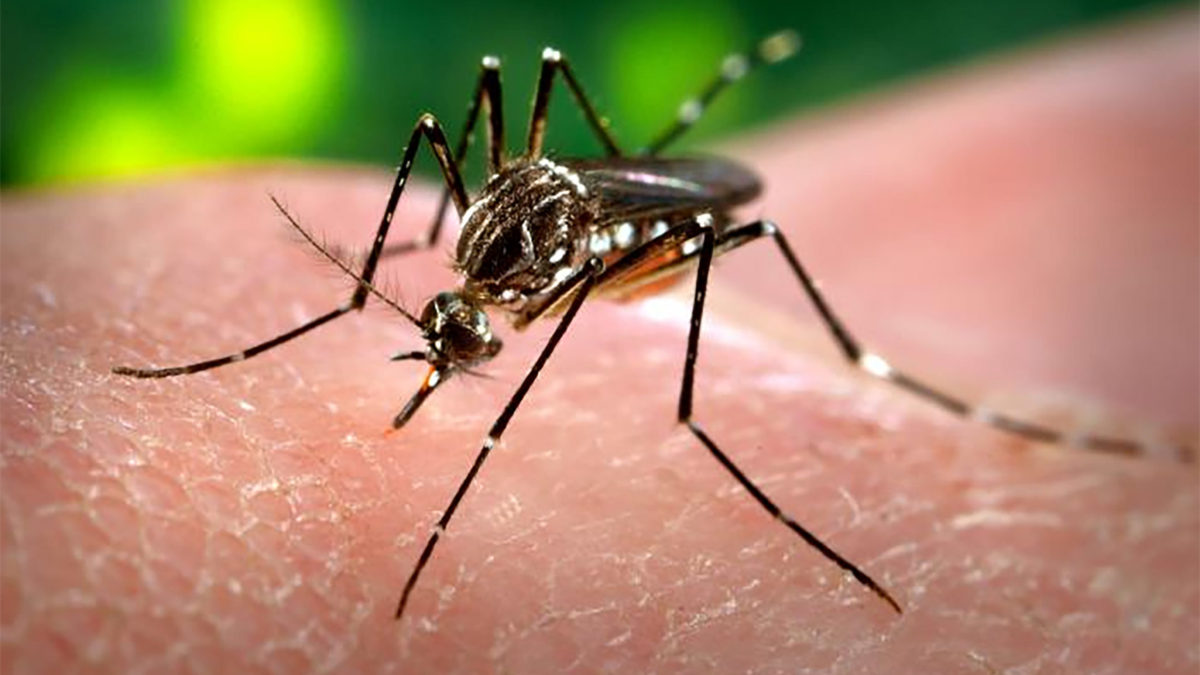
One of the most immense concerns related to climate change is how this matter will impact the health of Earth’s general population. Many factors lead into the role climate change has within the medical field and each individual’s well being. Air quality can slump, allergies can become significantly more aggravating, new diseases can arise, etc. The best way we can serve ourselves is to become aware of the changes our planet is facing, educate ourselves and others, and learn how to take the proper precautions to prevent our health from declining. Climate change is predicted to serve as a catalyst for vector-borne illness to become more of a risk to humankind. With this being said, mosquito evolution is on the upward trend with increasing temperatures and precipitation, and in return, will enable more mosquito-borne diseases. Therefore, throughout this post, I will examine and explain the evolution of mosquitoes in relation to climate, mosquito-borne diseases, and precautions we should be taking.
Our Planet’s Diverse Climate
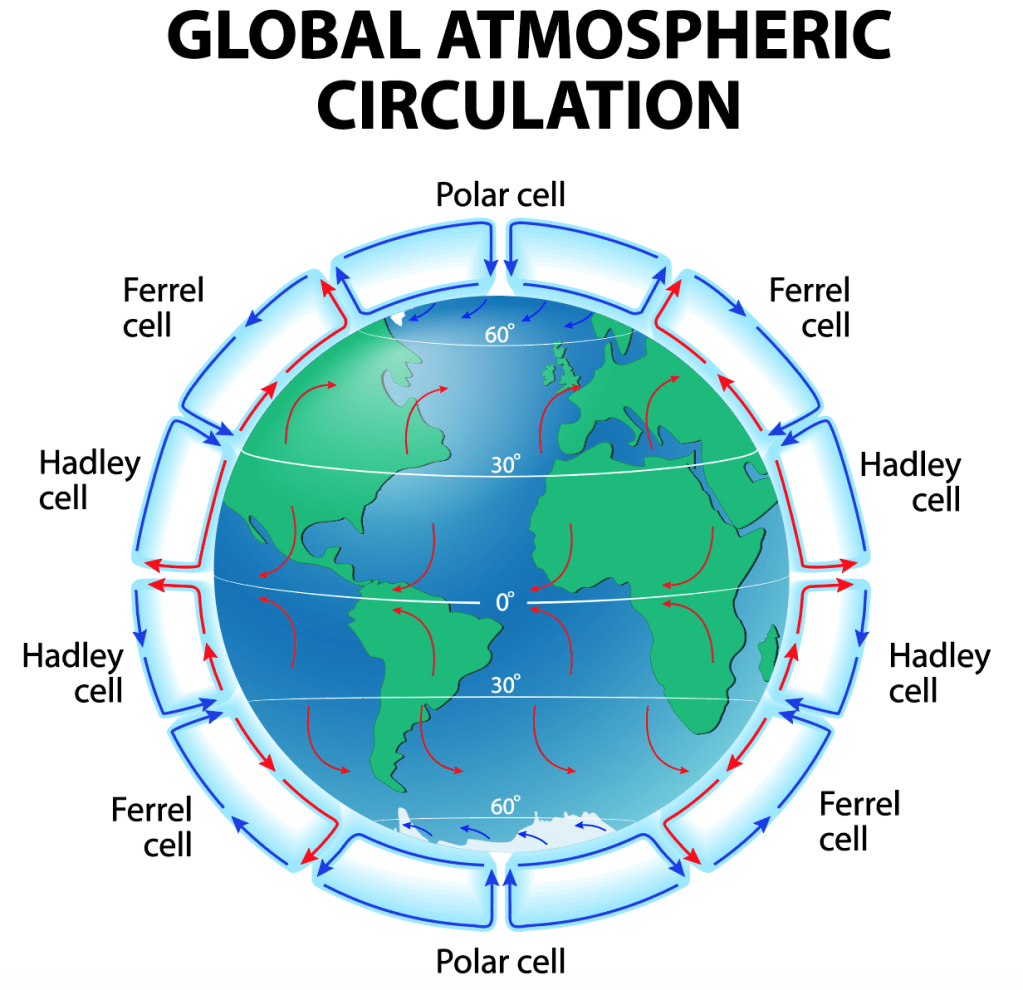
Have you ever wondered how it is even possible for climate to vary so much within a single country or continent? The way our climate is distributed and regulated across the planet is a result of global circulation patterns that vary greatly with latitude. Three different cells contribute to Earth’s diverse climate. The Hadley Cell, the Ferrel Cell, and the Polar Cell work as a system to balance heat and energy throughout our planet (click here to learn more about each cell). For example, a high pressure system (associated with dry weather and a clear sky) that acts on Earth’s surface is balanced by a low pressure system (associated with cloud formation and precipitation) that is occurring elsewhere. As a result, our planet’s regions are unique due to their exposure to different weather patterns. This concept provides reasoning behind why Columbia receives an average of 3,240 mm of precipitation on an annual basis, and the Sahara Desert only receives up to 101 mm of rain per year. With all of this being said, the key idea is latitude. Specifically speaking in terms of North America, its lands span a lot more latitude than Europe and Australia. As a result, the climate throughout North America will be more diverse within itself than it would in Europe or Australia.
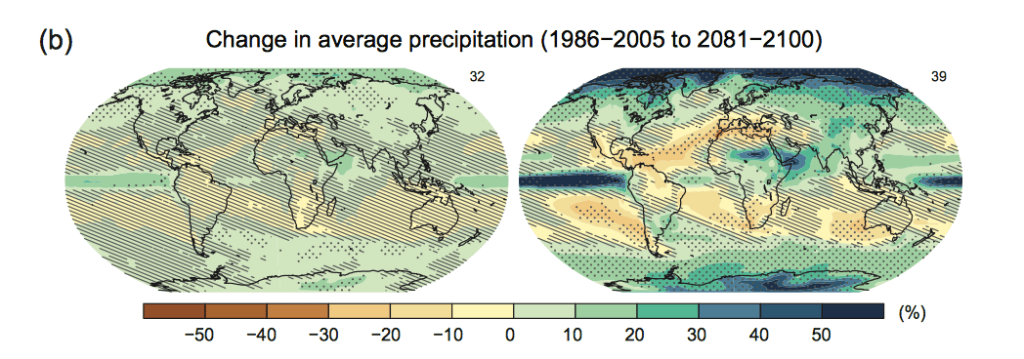
With greenhouse gas emissions on the rise, current models display the trend that dry regions will only become more water stricken, and wet regions will receive more precipitation. This pattern is showcased by Figure 2. Higher greenhouse gas emissions are creating a larger margin between wet and dry climates, making them almost seem extreme. Looking at Figure 2b, it can be concluded that the United States will see more precipitation with the exception of states such as Texas, New Mexico, Arizona, and regions of a few of their bordering states. Mexico also faces drier conditions. Mexico also faces drier conditions.
Both of these conditions bring on their own risks that will interfere with society and the environment. Hence why every continent is home to diseases, vectors, and conditions that are only specific to their region. Areas that are prone to dry conditions will experience consequences related to water shortages and national security. On the other hand, wet regions are prone to flooding, poor water sanitation, and more infectious diseases. Many of which can be caused by mosquitoes.
Mosquito Forecast
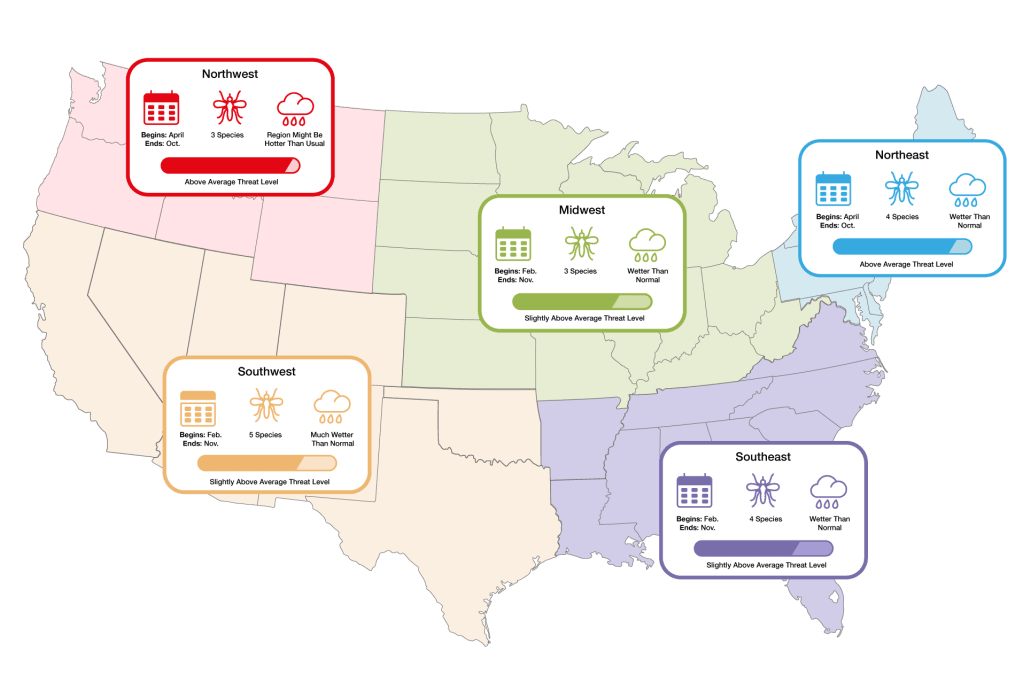
As mentioned above, mosquitoes are attracted to an environment that is warm and receives a sufficient amount of moisture. They are most active in warm temperatures, however, a cold front that follows warm weather can trigger these insects to increase their biting activity, as they are attracted to the carbon dioxide we emit. With temperatures trending warmer, mosquitoes are now able to migrate farther north to environments that would have once been inhospitable to them. At this time, researchers are investigating how far north these insects will travel. Female mosquitoes deposit their eggs in water, and they tend to look for bodies of water that do not contain fish. Mud puddles in your backyard, streams and creeks, and ponds are all areas that satisfy mosquito reproduction requirements. With the majority of North America being on the upward trend in regards to precipitation due to human-induced climate change, we can expect to see more mosquitoes. As of now, there are 7 known types of mosquitoes that reside in North America, and they are as follows: northern mosquito, western encephalitis mosquito, eastern tree hole mosquito, yellow fever mosquito, asian tiger mosquito, northern house mosquito, and southern mosquito. With each region of the country having their own distinct weather patterns, some mosquitoes are found in only a few corners of our country, where others are found almost anywhere. Figure 3 shows a regional breakdown that displays how many different species of mosquitoes are in each given location. However, the diseases that they carry are making their way throughout the United States.
Mosquito Borne-Diseases
When I think of deadly animals, a mosquito is not the first to come to my mind. In fact, I never even thought of such insects playing a role in this classification. Personally, I have always found mosquitoes to just be pests that leave their mark with a small bump on the skin that itches for days. Irritating, right? However, mosquitoes are beginning to pose threats to the general population due to climate change enabling the diseases they carry to spread quicker and easier. Adding onto this concept, rising temperatures decreases the Extrinsic Incubation Period (EIP), which is the time required for the virus to develop within mosquitoes. A decreased EIP allows more mosquitoes to survive long enough to become infectious to humankind. Extended periods of warm and wet conditions allows for more distribution of disease. Some of the primary diseases that mosquitoes carry are Malaria, Yellow Fever, West Nile Virus, Zika, and Japanese Encephalitis (for more information on these diseases, please click here).
Out of the diseases listed above, Malaria is the most deadly and caused nearly 500,000 deaths during the year of 2015. The symptoms of mosquito-borne illness usually include fever, chills, nausea, vomiting, diarrhea, and pain in joints and muscles. These symptoms do not make an appearance until a few days after being bit by a mosquito that carries any given disease.
The Eastern Equestrian Encephalitis Virus (EEE virus) is a disease that caused numbers to rise North America during 2019. The symptoms of EEE resemble those of the diseases listed above. This particular virus can result in systemic febrile illness and neurologic diseases such as meningitis and encephalitis. An estimated 1/3 of the population who contract this disease lose their lives 2 to 10 days after symptoms begin.
Unfortunately, there are not vaccines or preventative medications that are available for all mosquito-borne diseases. Therefore, we must become aware of and learn to take proper safety measures.
Taking Proper Precautions
As of now, the best preventative measures we can take are utilizing mosquito repellant, wearing proper clothing, sleeping in nets or tents (if sleeping outside), keeping our yards clean, and keeping up with vaccinations.
Wearing repellant and sleeping in proper conditions such as a tent or placing netting around a hammock are some of the most common ways to prevent mosquito bites.
Wearing proper clothing such as long sleeves, long pants, and high socks will make it more difficult for a mosquito to gain access to the skin. Although this option is not favorable in warmer temperatures, it is known to prevent bites.
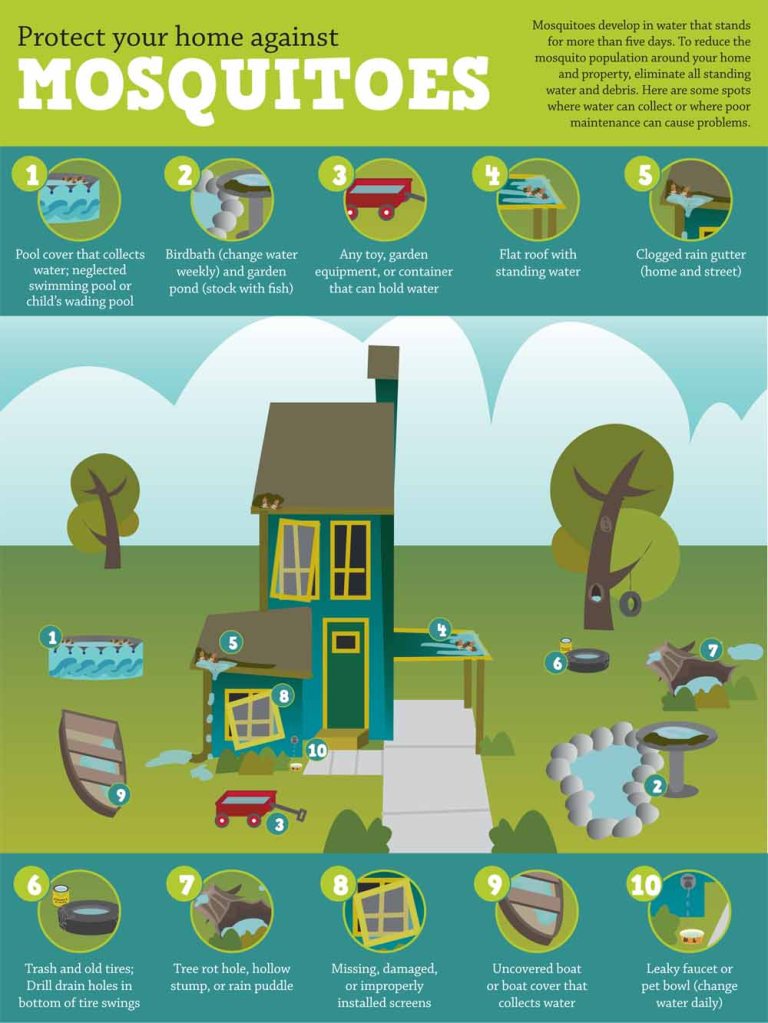
Keeping yards clean is imperative to eliminating areas of pooling water for mosquitoes to reproduce in. Piles of leaves and shrubs should be cleaned up, clogged gutters should be cleared, kids toys should not be left out, and objects that have the ability of holding any water should be dumped on a frequent basis. Figure 4 is a good representation of areas that require attention within a backyard to prevent mosquitoes from moving in and establishing a home base.
Lastly, as mentioned above, vaccines are available for some but not all mosquito-borne diseases. Two of the main diseases that have preventative vaccines are yellow fever and Japanese encephalitis. When traveling internationally, individuals should be aware of any possible diseases they can contract from their destination and vaccinate accordingly.
Final Thoughts
Increasing mosquito populations and their diseases evolving and spreading more readily is just another example of such a small yet large impact of climate change. Unfortunately, our country is predicted to undergo an upward trend with increasing greenhouse gas emissions, which causes an overall increase in temperature. Therefore, the mosquito population is expected to increase, as they thrive in warmer weather. Additionally, the regions in North America that will receive more precipitation are prone to more standing water and swampy areas, both of which will attract mosquitoes. With all of this in mind, we need to make ourselves aware of the changes our planet will experience and educate others.
It is becoming more and more straight forward that human-induced climate change impacts so many aspects of life. However, it is hard to think of the impacts on such a microscopic scale, rather than a big picture. For example, most know that droughts, a possible cause of climate change, will cause water shortages. However, national security can become an issue due to individuals leaving their country illegally to seek the proper necessities, and this is an issue that does not come to mind at first.
Signing off
-Shannon
 Global Climate Change and Society
That was very informative regarding mosquitoes and climate change . It is very easy to overlook that aspect of the extra rain and heavy downpours we have been receiving and what else we need to be aware of. More obvious things tend to jump out such as flooding. This story was a very good eye opener of what else we need to be concerned about as these weather patterns are changing . A good realization of the mosquito population increasing and the scary diseases they can carry and spread more rapidly. I’m glad for this story and the information it provided regarding this situation. I do remember hearing stories on the news last summer and the EEE virus that people were contracting and how scary it sounded. As we all look forward to summer coming I forgot about all the new worries that each season seems to bring with it and what we need to be aware of. Thank you for the informative writing and writing on this subject.
LikeLike
Thank you for taking the time to read my blog and gather some thoughts about the content! I agree. There are many impacts of climate change that do not come to mind, so it is important that we educate others and stay informed. Unfortunately, as you mentioned, mosquito season is on the horizon for our region of the country. Refer to the link i included for some precautions to take to be safe!
LikeLike
Dear Shannon, again you came across with a winner. It is very very informative and educational. There are so many things that I didn’t know and I’m glad you brining them out. I want take a walk around our property and check for all the places that the mosquitos could be livimg. Your informative article has definitely given me second thought a about this pesky mosquito. Keep up the good work!
LikeLike
Linda,
Thank you for your kind and thoughtful comment. Thank you for taking the time to read my blog post. I am glad that you learned from it and are now aware of the threat that the mosquito population poses on humankind! I think it would be a great idea to investigate your property within the next month or so!
LikeLike
Frank Boyd
Shannon, I found your article very interesting. I have been aware about leaving items around your home that will catch and retain some water and am careful to eliminate them as soon as I find them. I was shocked to see the high number of deaths from malaria. Somehow I thought we had found ways to prevent most of that. Again very informative article you wrote. It will help keep me even more alert to eliminate breeding places around our home.
Thank you very much for this information.
LikeLike
Pap,
Thank you for taking the time to read my post and leave a comment! I appreciate it! I am very glad to hear that you were aware of possible mosquito breeding bases prior to reading this blog. I am glad that you are going to be more aware of breeding places around your property. I would definitely check items that you keep around the pond! That’s the biggest concern I can think of with your property.
LikeLike