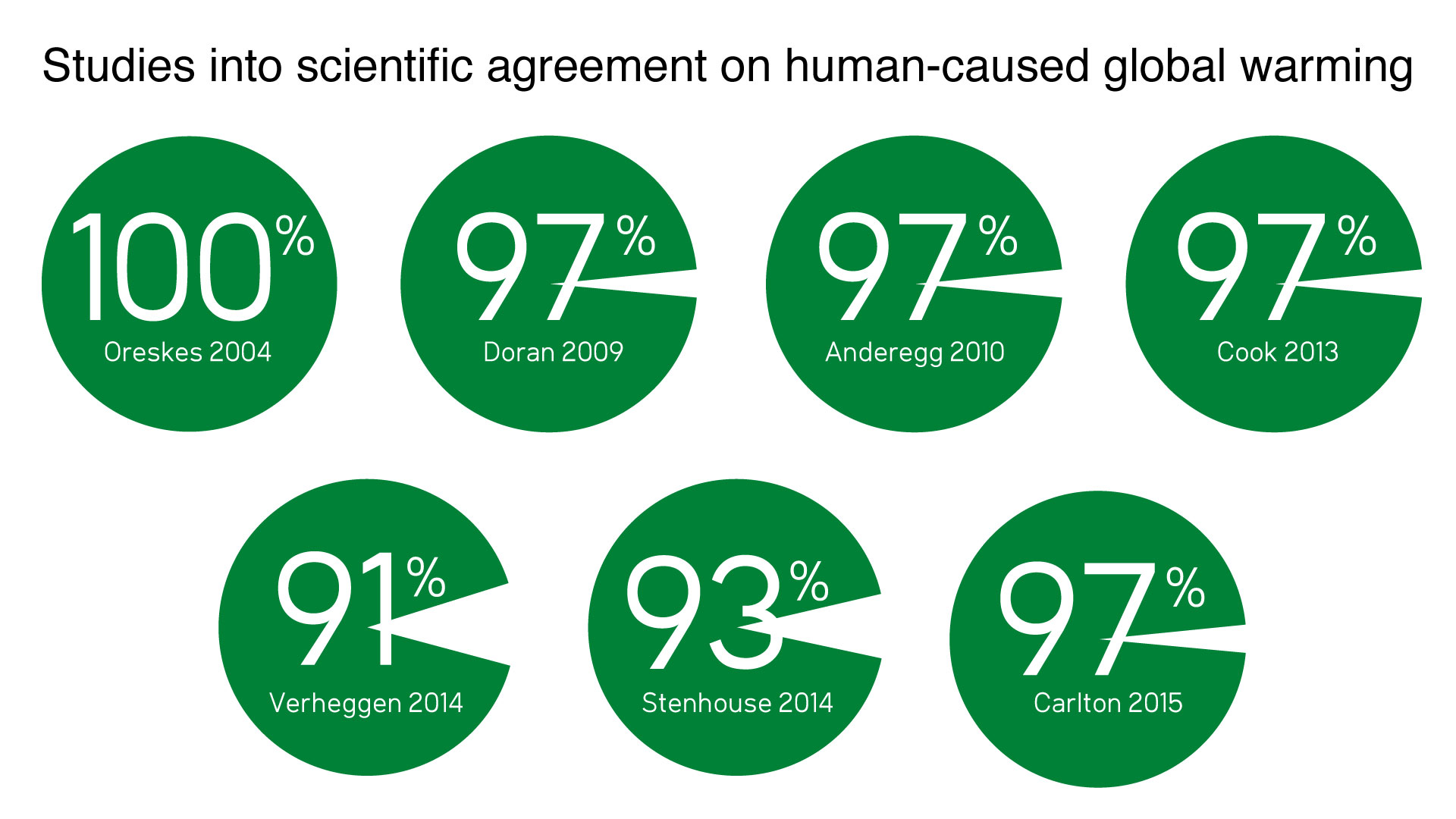
Proving something common that climate deniers say wrong is interesting to say the least. The stuff that these people say just to make them believe it is true is ridiculous. There are many to choose from but the one I am going to prove wrong today is “The Earth is Too Big for Humans to Have an Impact”.

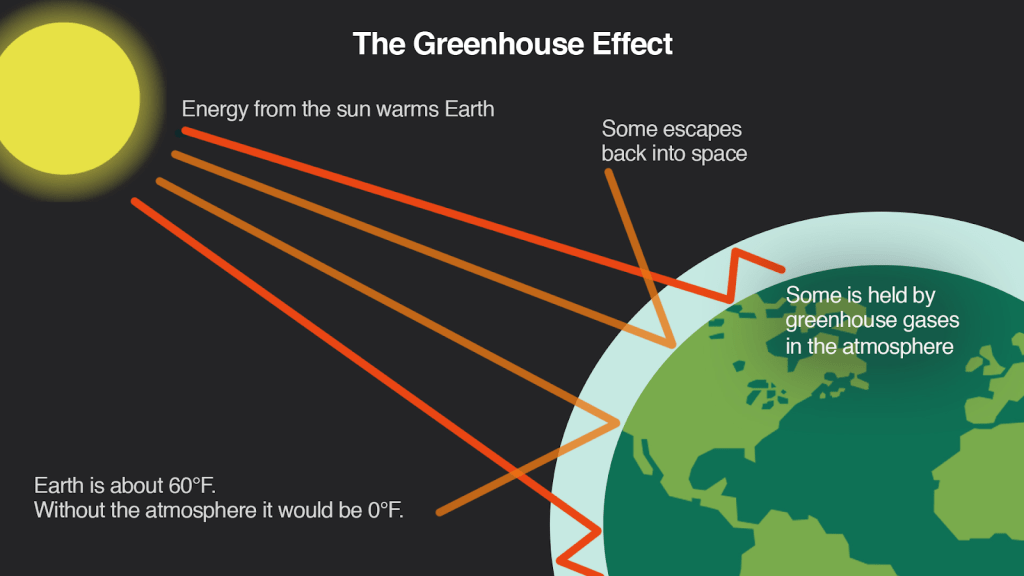
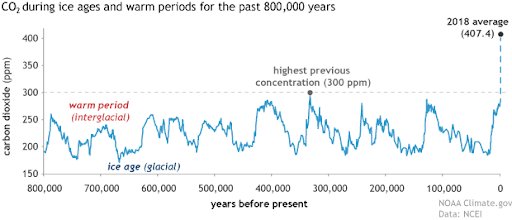
To prove this wrong, you need to go all the way back to the Industrial Revolution. The coal-powered steam engine, internal-combustion engine, radio, automobile, and airplane were all from technology developed in this period. This period of time created many great things for today’s world but it also harmed it by its long term use. The concentration of carbon dioxide in the atmosphere has gone up exponentially since the Industrial Revolution. Along with this, the Earth’s global temperatures have gone up along with this. If this isn’t enough evidence to prove that the Earth is NOT too big for humans to have an impact I can go on further to explain why you’re wrong.
Global temperatures rising and carbon dioxide levels rising are not the only clear evidence showing how humans have changed the Earth and its climate. It is, however, a factor to other keys points probing my reasoning. Things such as ocean temperatures rising and the water becoming acidic, extreme weather events becoming more deadly and destructive, major sea ice glaciers melting and not recovering, and there’s many more.

At least ¼ of the carbon dioxide released by fossil fuels sinks down into the ocean waters and dissolves. Since the beginning of the industrial era, the ocean has absorbed about 525 billion tons of carbon dioxide from the atmosphere, which is around 22 million tons per day. When water and carbon dioxide mix, they combine to form carbonic acid. Carbonic acid is weak compared to some of the well-known acids that break down solids, such as hydrochloric acid and sulfuric acid. The weaker carbonic acid may not act as quickly, but it works the same way as all acids, it releases hydrogen ions, which bond with other molecules in the area.
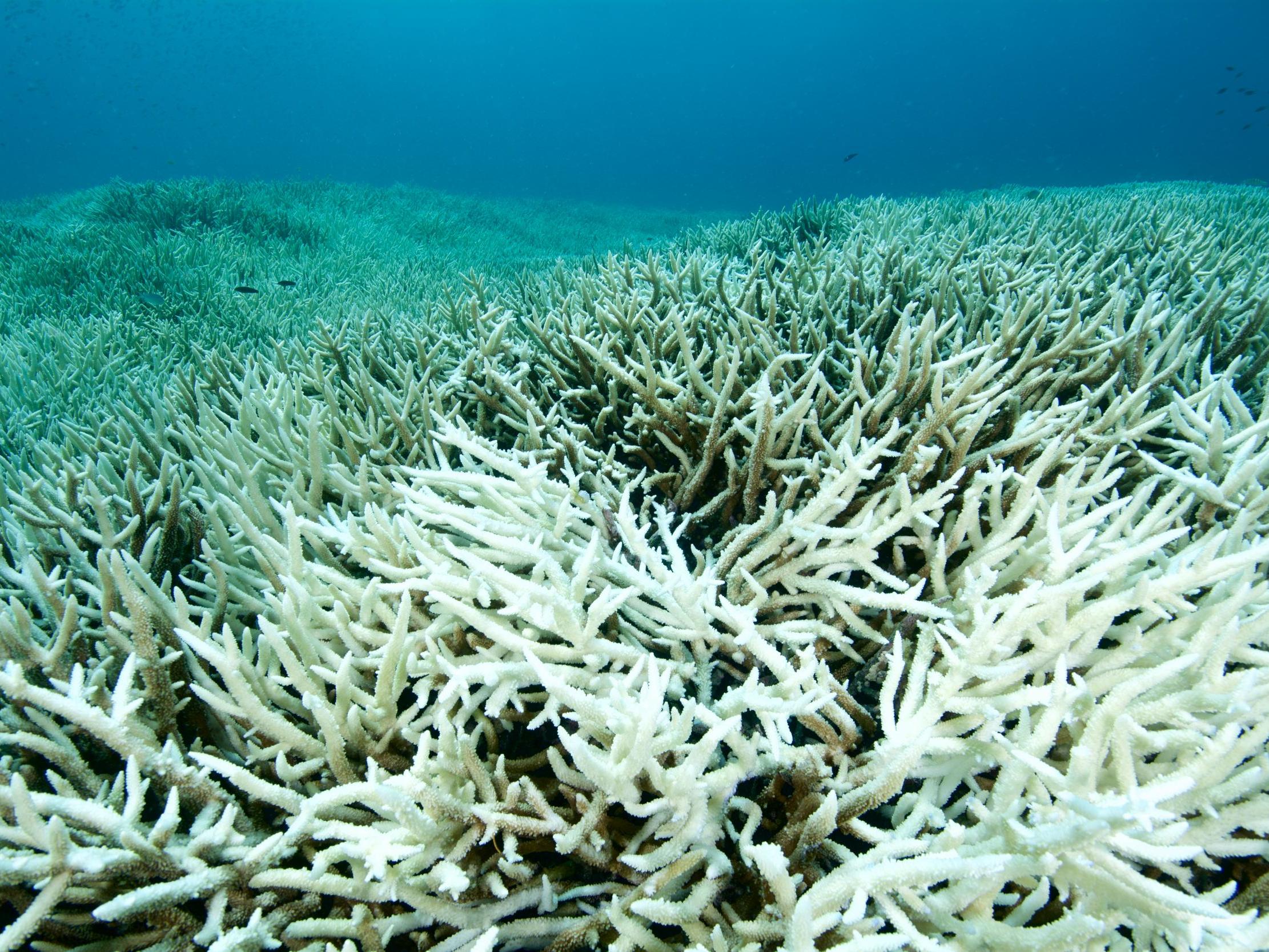
Reef-building corals craft their own homes from calcium carbonate, forming complex reefs that house the coral animals themselves and provide habitat for many other organisms. Acidification may limit coral growth by corroding pre-existing coral skeletons while simultaneously slowing the growth of new ones, and the weaker reefs that result will be more vulnerable to erosion. This erosion will come not only from storm waves, but also from animals that drill into or eat coral. There are predictions that by roughly 2080 ocean conditions will be so acidic that even otherwise healthy coral reefs will be eroding more quickly than they can rebuild.
Shelled animals in the ocean will have a hard time all together, especially with building their shells. Mussels and oysters are expected to grow less shell by 25 percent and 10 percent respectively by the end of the century. Some of the major impacts on these organisms go beyond adult shell-building. Mussels’ byssal threads, with which they famously cling to rocks in the pounding surf, can’t hold on as well in acidic water. This means oyster larvae don’t even begin growing their shells. In their first 48 hours of life, oyster larvae undergo a massive growth spurt, building their shells quickly so they can start feeding. But the more acidic seawater eats away at their shells before they can form. This has already caused massive oyster die-offs in the U.S. Pacific Northwest.
Plants rely on sunlight and water to survive. Underwater plants like algae thrive off of acidic waters. Some of the major impacts on these organisms go beyond adult shell-building, however. Some species of algae grow better under more acidic conditions with the boost in carbon dioxide. But coralline algae, which build calcium carbonate skeletons and help cement coral reefs, do not fare so well. Most coralline algae species build shells from the high-magnesium calcite form of calcium carbonate, which is more soluble than the aragonite or regular calcite forms.

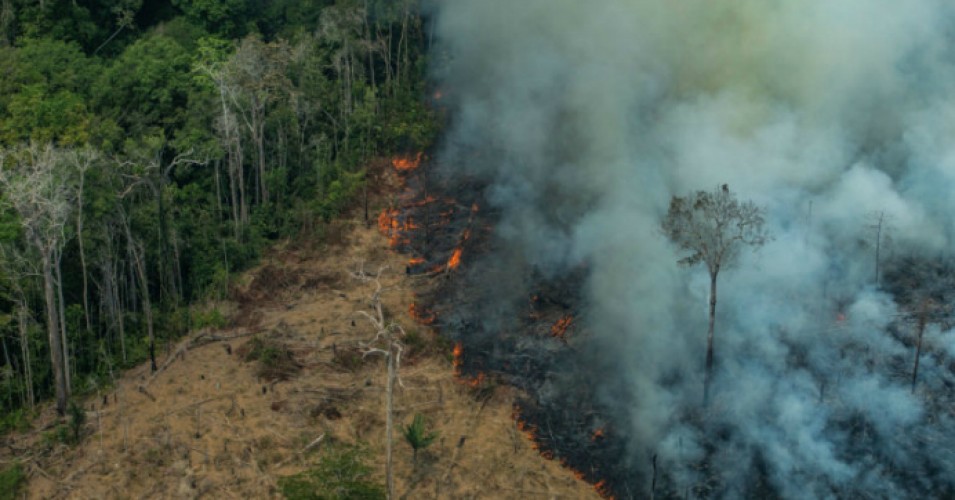
Climate change has been a huge contributor to wildfires around the world. Wildfire risk depends on a number of factors, including temperature, soil moisture, and the presence of trees, shrubs, and other potential fuel. All these factors have strong direct or indirect ties to climate variability and climate change. Research has shown that changes in climate that create warmer, drier conditions, increased drought, and a longer fire season are boosting these increases in wildfire risk. For much of the U.S. West, the average annual 1 degree C temperature increase would increase the median burned area per year as much as 600 percent in some types of forests. In the Southeastern United States modeling suggests increased fire risk and a longer fire season, with at least a 30 percent increase from 2011 in the area burned by lightning-ignited wildfire by 2060.
Wildfires impact federal and state budgets, the health and daily life of the public, and obviously our natural environment. The burning of plants further worsens our problem with climate change because of the release of carbon dioxide that the plants have absorbed throughout their lives. If we could minimize the burning of wildfires, that would better our planet and the people who live on it.

Glaciers are so sensitive to the Earth’s global temperature that they are proof of the Earth warming up. Scientists attribute this massive glacial retreat to the Industrial Revolution, which began around 1760. Several ice caps, glaciers and ice shelves have disappeared altogether in this century. Many more are retreating so rapidly that they may vanish within a matter of decades. The World Glacier Monitoring Service (WGMS) tracks changes in more than 100 alpine glaciers worldwide. Forty-two of those glaciers qualify as climate reference glaciers because their records span more than 30 years.
Written by: Serina K. Croyle
Sources:
Bennett, Jennifer, et al. “Ocean Acidification.” Smithsonian Ocean, 20 June 2019, ocean.si.edu/ocean-life/invertebrates/ocean-acidification.
Project, The Climate Reality. “How Do We Know Humans Are Causing Climate Change?” http://www.climaterealityproject.org/blog/how-do-we-know-humans-are-causing-climate-change-0.
“National Snow and Ice Data Center.” Glaciers and Climate Change | National Snow and Ice Data Center, nsidc.org/cryosphere/glaciers/questions/climate.html.Climate Reality, 5 Mar. 2020, “Wildfires and Climate Change.” Center for Climate and Energy Solutions, 16 Apr. 2020, http://www.c2es.org/content/wildfires-and-climate-change/.
/cdn.vox-cdn.com/uploads/chorus_image/image/54323729/Pasted_image_at_2017_04_18_03_43_PM.0.png)


 Global Climate Change and Society