Be yourself; Everyone else is already taken.
— Oscar Wilde.
This is the first post on my new blog. I’m just getting this new blog going, so stay tuned for more. Subscribe below to get notified when I post new updates.
Be yourself; Everyone else is already taken.
— Oscar Wilde.
This is the first post on my new blog. I’m just getting this new blog going, so stay tuned for more. Subscribe below to get notified when I post new updates.
Wildfires can burn up to 5 million acres of land in the United States each year. While they can have natural causes, wildfires are commonly caused by humans. Wildfires are larged uncontrolled fires that quickly spread through wild landscapes. There are three different types; forest, brush, and peatland fires. These describe the different landscapes they are spread through.
The Fire Triangle

Source: https://www.fireaction.co.uk/news/fire-triangle-explained/
There are three different components involved in a wildfire. This is called the fire triangle. These sources include heat sources, such as the sun, lightning, or a match dropped in the area. Next in the fire triangle comes fuel. Fuel sources in a wildfire can be things such as dry or dead grasses, leaves, and trees. Living vegetation (also known as green fuel) can also be fuel in a wildfire. Pine Trees and other similar evergreens contain flammable oils that can burn when exposed to a heat source. The final component in the fire triangle is oxygen. When air movement occurs, this results in more oxygen being supplied to the fire, and also aids in transporting or spreading the flames.
Natural Causes
A warmer climate and weather patterns such as El Nino, can create the hot dry conditions needed for a wildfire. While the warming temperatures do play a big role of the recent increase in wildfires, natural causes only account for about 10% of wildfires. Even the initiation of the wildfire isn’t necessarily a natural cause, the hot temperatures can still add fuel to the flame. Even though natural causes account for a small percentage of wildfires, it is believed that the warming climate could be a cause of the overall increase in wildfires, and intensity.

Source:https://www.climatesignals.org/resources/graph-large-wildfires-increasing-across-west
Man-Made Causes
About 90% of wildfires are from man-made causes. This can be caused by things such as campfires that become uncontrollable, improperly handled cigarettes, or even arson. These types of wildfires can, and should be easily prevented.
Wildfires are most common in the western United States. High temperatures, drought, and frequent lightning and thunderstorms can create the perfect conditions for a wildfire. While wildfires are destructive, they still do play an important role in nature. They can help forests by removing harmful insects, or diseased plants. They can also clear canopies to help seedlings on the forest floor receive sunlight. Just by being aware of the conditions that are necessary for wildfires to occur, they can be managed and prevented.
Wildfire Prevention Tips
Sources: https://www.nationalgeographic.com/environment/natural-disasters/wildfire-safety-tips/#close
If you, or somebody you know suffers from seasonal depression, you may be wondering how the changing climate can affect these moods. It is estimated that about 20% of americans suffer from seasonal depression, or the more proper term seasonal affective disorder (SAD). According to the National Institute of Mental Health, In order to be diagnosed with seasonal affective disorder, you must have a recurring seasonal pattern of depression. Seasonal affective disorder is different from depressive episodes. With the chart below, you can compare the symptoms:

Source: https://www.clearvuehealth.com/sadsymptoms/
Seasonal affective disorder can come and go with minor-cold bouts of weather. Although for some it can happen during warmer months, it is most likely to happen during the cold ones. There has been a rising trend of major winter storms and almost never-ending cold snaps sweeping across the country in the past years. This takes a toll on the mental health of many americans. In the graph below, you will see the increase of SAD during the cold months:

Source: Google Trends
Scientists say that the relationship between the Arctic sea ice decline, ocean patterns, upper winds, and the changing jet stream could be responsible for the extra cold temperatures we have been experiencing in the midwest and east coast. This instability can cause the Arctic air to flow southward where it comes in contact with warm, moist air. The result includes severe winter weather that will impact some regions.
Where You Live Can Make You More Susceptible
While gender, age, and family history all play a role in your probability of being diagnosed, your geography is the main determinant in your risk. Seasonal affective disorder is more common in people who live far north, or far south of the equator, where seasonal changes are much greater than in places closer to the equator. In the United States, 1% of people living in Florida are affected by sadness, while 9% are affected in Alaska. It is also said that those who have to switch jobs during certain seasons of the year are more at risk for developing seasonal affective disorder.
How Can This Be Treated?
There are many several methods that can be used in treating SAD. Once diagnosed, your doctor may recommend light therapy. This can help by exposing bright light to a person within the first hour of waking up. It mimics outdoor light and can cause a change in brain chemicals linked to mood. Light therapy appears to be the most effective, but if it doesn’t work for you, your doctor may also recommend medications, or psychotherapy.
Conclusion:
Overall, we know that cold weather greatly increases the chances of people being diagnosed with seasonal affective disorder, and the longer cold months due to the current climate change crisis will only increase that number. Luckily there is effective treatment, but not everyone seeks help. To do your part, contribute to a cleaner environment to help people cope with seasonal affective disorder in the far future!
Sources:
https://www.ncbi.nlm.nih.gov/pmc/articles/PMC4446935/
https://www.neefusa.org/weather-and-climate/weather/seasonal-affective-disorder
By Brendan Wissinger
For this Blog Post, I am doing it on the subject of Climate Denial. There are several types of Climate Denial. There is denial for financial, political and personal reasons, and then are similar ideologies that also promote inaction on the climate crisis: Doomism and the “I admit is exists, but I won’t do anything about it” mindset.
First let’s debunk some denialist claims on the Climate Crisis.
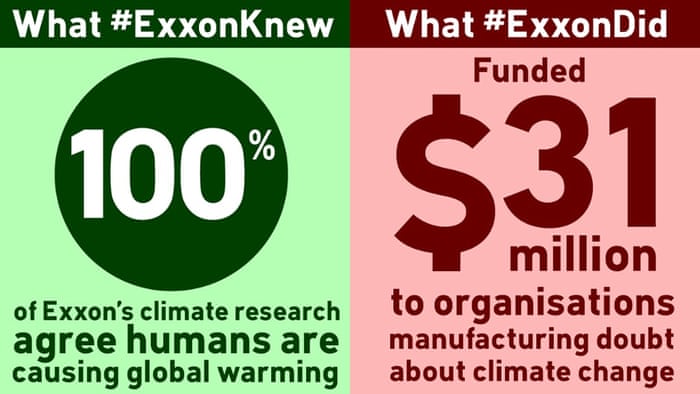
If we were to act many large companies and CEOs would stand to lose a lot of money because of decarbonization, though it would help our economy. Actually fossil fuel industries wouldn’t exist and so they have funded a large campaign of misinformation and bribery to stop any action on the crisis even though they know that climate change was occurring. For example the fossil fuel industry. The fossil fuel industry knew about the crisis as early as 1977, before the public knew about it, but instead of diversifying their industry, they spread disinformation claiming the “science wasn’t settled” and that “climate change is good” and that “climate change is caused by natural forces not human ones”. They bribed officials and used their disinformation campaigns to make sure climate deniers got elected and stayed in office, blocking any climate legislation and encouraging politicians to give more subsidies to the oil industry. The campaigns of many republican politicians, for example James Infole who famous held a snowball on the senate floor, claiming it was evidence that Climate Change wasn’t real. Similarly an Australian Senator held up a piece of coal and said it looks harmless so it must be harmless. They have funded think tanks for example the Heartland Institute and Americans for Prosperity. The merchants of doubt funded campaigns denying the Crisis. They are now using social media to try to spread denial. An example is that of youtube videos, ones that don’t accept the consensus on the Climate Crisis outnumber ones that accept the consensus. They have spread lies to try to discredit climate scientists, and convince a large portion of the American public that the climate crisis isn’t real.

Denial is also done because it may algin with people’s political views or they are scared of acting on it or scared of the Climate Crisis themselves, psychologists call this “motivated interference.” For example a coal miner may not believe in the existence of Climate Change, because believing in it would mean he would have to allow people to hurt his career path. For a republican wouldn’t believe it because most of his or her party doesn’t acknowledge its existence. Someone that is directly effected by the Climate Crisis may not believe it exists, because they don’t want it to exist. Denial is a self-defense mechanism meant to allow an individual to keep their mental health, but in modern times it can only hurt us because whether we believe in it or not, it still exists, and we can do thinks about problems we personally don’t have much control over for example voting. Just because someone denies something doesn’t necessarily mean that they are easy to win an argument with, because many deniers then use false evidence to build up their own reality. Psychologists call this “motivated reasoning.” Instead of deciding facts from an impartial facts, they cherry pick their facts and create their own reality. Deniers tend to be lower educated, older and more religious than people who accept the Climate Crisis.
In many countries, if not almost all, most people say Climate Change is a threat to their countries, even in the US, and Australia. In the US 59% of people say the Climate Crisis is a major threat to the US. But there are large amount of people who think the Climate Crisis is only a minor threat, 23% and or no threat, 16%. Even though 97% of climate scientists agree that human caused climate change is occurring. But concern is increasing across the world. In the US 83% of democrats believe the Climate Crisis is major threat to the US, and only 27% of Republicans believe the same. Sixty-Seven of Americans believe that the federal government is not doing enough on the climate crisis. Sixty-Three of Americans say that environmental regulations should be put in place. Also over 60% of Americans said that the climate crisis is affecting their community. For the first time, the Climate Crisis is listed high among America’s priorities.
It is difficult to change a denier through facts and figures because humans primarily respond to emotions. Instead to change deniers we should focus on assuring them about solving the crisis can be done and won’t hurt them, and using conservative values of patriotism, order and defending nature can help reset views. But ultimately we’ve been wrong to focus on deniers, we should be focusing on the undecided and mobilizing the people who have decided but have not yet acted on the crisis.
The complexity and the size of the issue may make people not want to believe it exists. People don’t want to take the individual actions that we help get us to solving the Climate Crisis (not that individual actions are any more important than systemic action, systemic action is more important). The list of impacts and solutions to the Climate Crisis is so long it is difficult to memorize. Afterall my colleges have an entire class devoted to it (like the Class I am writing this for). And the problem doesn’t seem constant as climate disasters don’t happen every single day, at least for people in the Global North. The immensity of this issue makes it so telling facts and figures may actually push people away from acting and reinforce (or even start) denial. To motivate people to act, we need to come off in a simple, clear and emotional yet accurate manner. But rather we need to focus on solutions that we can do individual to try to overcome the fear we may feel about this problem and promote systemic action on the issue, but there is a limit to that, that coming on too strong can turn people away, into believing it but forgetting about it and doing nothing about it, which does the same thing as denial. We need to provide practical, viable and attractive alternatives. For example instead of saying we need to stop entirely eating meat, we need to cut back on meat, or instead of not going on any flights, say don’t go on one flight a year, and slow build up pressure to move away, one step at a time. Or instead of saying we need to ban all fossil fuels, saying we need to stop building new oil rigs in the United States. Or promoting public transport and renewable energy. Or bringing reusable bags to the supermarket, or replace all of your lightbulbs to LEDs, or cut down on the plastic. Better yet, the best solution to Climate Anxiety and Climate Guilt, is Climate Activism. So become an activist. And I am not saying you have to dedicate your whole to it, just some of your time.
But then there are the people we have pushed too far, who have become doomists, who believe that we can’t do anything about the Climate Crisis, so we should on like always over a cliff of doom, that at bottom of which is human extinction. Doomists may believe they are doomed for similar reasons that deniers do, or different ones. The doomists are not right either, we have time to stop this and end this. To end this we have to push forward solutions in an emotional, practical, viable, attractive, pragmatic, concise and accurate manner, mainly not pushing for individual solutions but political ones. For example if you’ve notice I have said the word’s climate crisis instead of climate change a lot, its because Climate Crisis gives a better response where it is enough to send an emotional response and sense of urgency but yet not too emotional to make it seem unreal.
We must push for massive political action to transition away from fossil fuel use, build renewable energy and public transportation, implement regenerative agriculture, and electrify housing and promote energy efficiency. It’s a tall order but it can be done and denying or it pretending doesn’t exist or saying we’re doomed won’t help us. We have to accept that this will be difficult road, but the alternative, it much much much worse.
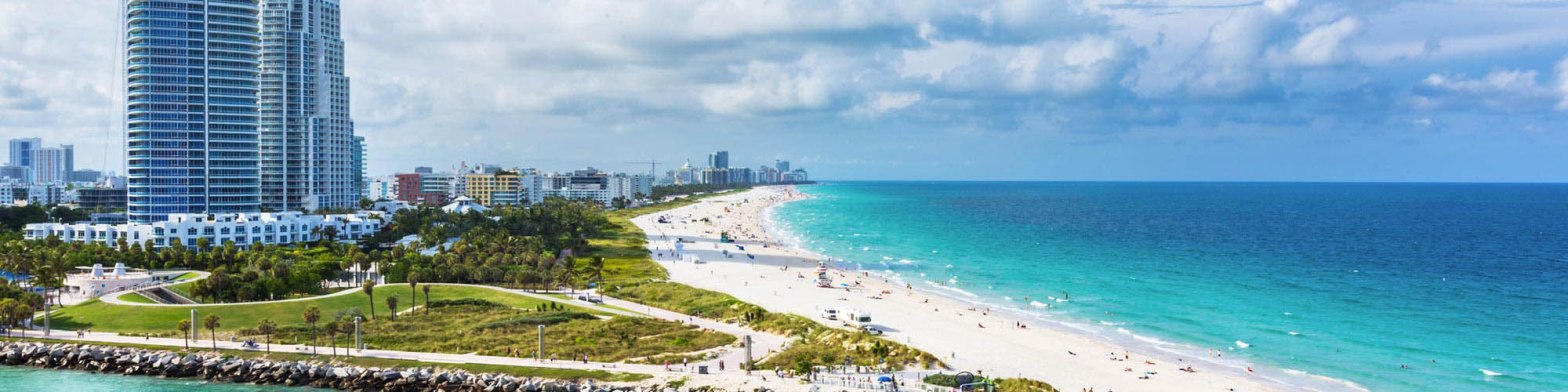
When a North American vacation is in mind, most think of relaxing on a beach with the water near and clear. Florida is a large tourist attraction in our country due to its many beaches. With the state actually being a peninsula, it provides availability to many beautiful, coastal views that are more than exceptional for vacationing. I hope to bring some vitamin D to you as we discuss this matter in hopes that we will be able to have a beautiful, bright summer full of vacations and memories after the quarantine is lifted. However, as our planet continues to experience a change in climate, have you ever pondered what the outcome might be for coastal attractions such as Florida? Will sea level rise make this location difficult to maintain? Throughout this blog post, I will be addressing sea level rise, its causes, and its specific impact on Florida.
National Oceanic and Atmospheric Administration (NOAA) notes that global sea level is on the rise and has already set astounding records. As of 2014, sea level was measured to be 2.6 inches overall higher than the average in 1993. The two major causes of sea level rise highlighted among others are thermal expansion and increased melting of land based ice (click here for more information on other causes).
Thermal expansion is a result of water expanding when it experiences an influx of energy. The land based ice population includes glaciers and ice sheets, with both of these features experiencing more melting each year, they contribute to global sea level rise. Therefore, it is estimated that our oceans are absorbing 90% of the increased atmospheric heat that results from greenhouse gas emissions. This is a large number that must be cut down soon before too many damaging results occur.
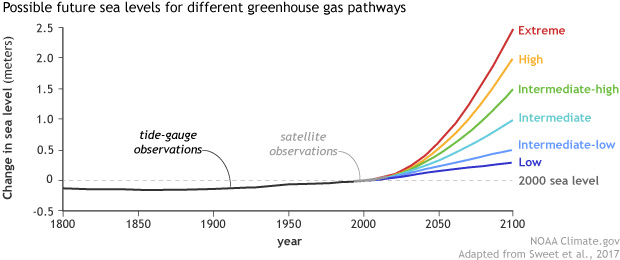
Not all locations will experience the same outcomes of sea level rise. Those countries that are low-lying, in terms of sea level, are at the highest risk of the outcomes. Speaking in terms of the United States, a decent percentage of our coastal locations are home to large populations, so this poses a threat to large parts of our society as well. Sea level rise will definitely lead to more frequent severe flooding, especially that of high tide flooding and storm surges. In return, this flooding can be damaging to infrastructure, roads, subways, gas wells and water supplies. As I mentioned in one of my previous blogs, floods can impact our sanitation systems and allow water borne illnesses to thrive and spread throughout the human and animal populations. In addition to damage and health, frequent floods can amount to any of these subjects affecting the employment status of many coastal residents, causing their local economies to suffer (click here to learn more). Additionally, Florida is a tourist attraction in terms of year round vacationing. This allows Florida’s economy to rely somewhat on tourism, and with rising sea level, tourism will decrease leaving their economy to suffer from its loss.
With the state of Florida being a peninsula that resides on the south eastern corner of the United States, it is prone to seeing the shore lines rise easily. As of now, sea levels are up to nearly 8 inches higher than they were in 1950, leaving 120,000 Florida properties at risk of tidal based flooding. Most of the flooding occurs in the late summer and fall months for two reasons. One being that the months of August – November are hosts of North America’s hurricane season, which brings an abundance of precipitation to the state if the storm makes landfall near. On the other hand, the gravitational pull of the sun and moon drags the water farther inland. Tides known as “king tides” can occur and be nearly 12 inches higher than regular tides. This puts this low-lying state at more of a risk during the fall months.
Based on satellite data from the range of 1984 – 2016, shorelines have dissipated at a rate of more than 0.5 m per year. This amounts to the sea claiming more than 28,000 square kilometers of land. Beaches are at risk of eroding completely. As I mentioned above, most of North America’s coastal locations are developed and serve as home to large cities or nearby infrastructure. Development along coastlines acts as a sudden barrier to coastal retreat and prevents the shorelines of beaches from moving inward as sea level rises. Additionally, the fact that waves and currents displace the sand of beaches can add to the risk of extinction of our country’s beaches.
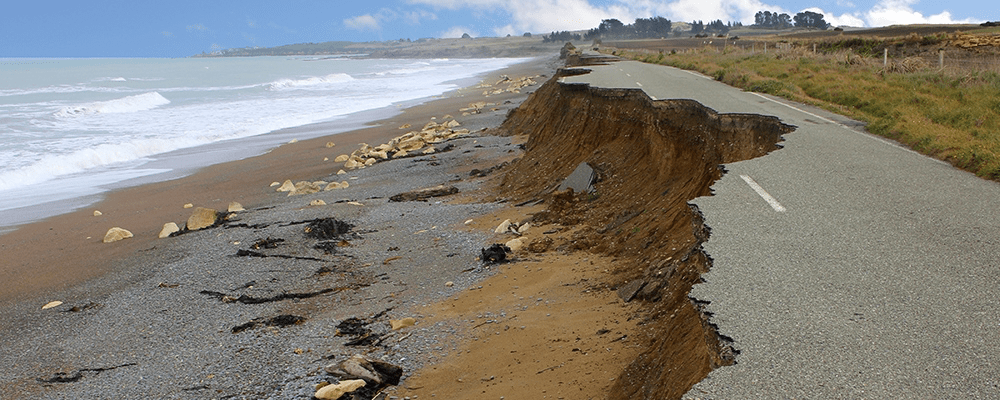
Just like any other complex problem, there is not a single solution that will solve Florida’s sea level rise issue. As of now, the state is looking at plans that will amount to $4 million to implement and put to trial. Most coastal states would go about construction of sea level walls. However, Florida contains porous limestone beneath its surface, and this material is not ideal for construction. The limestone appears to be sponge-like and would allow for groundwater to rise at the same rate of the ocean. As of right now, the southernmost county of Florida is planning to abandon miles worth of roadways if funds cannot be secured to protect them from sea level rise.
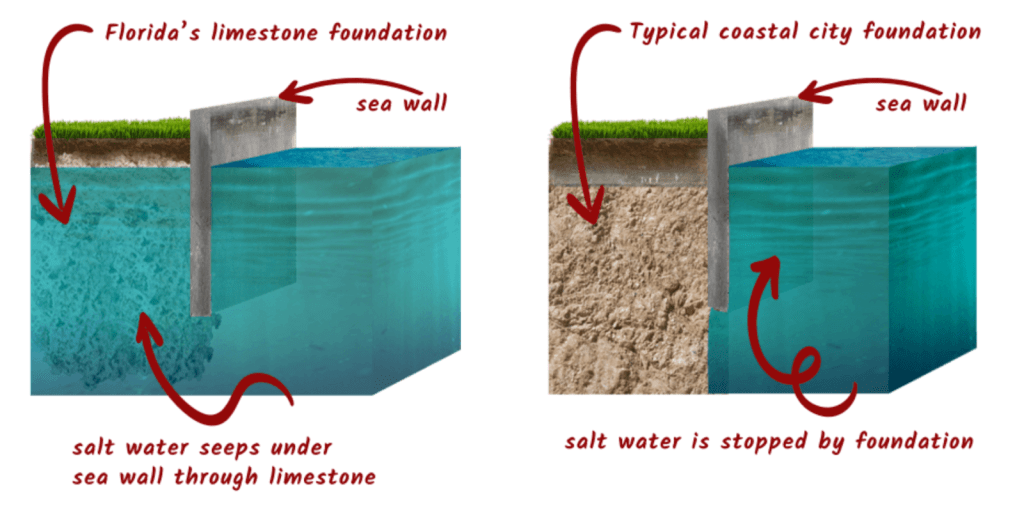
Many sources have confirmed that sea level is rising and will pose threats to many residents and structures. There are too many consequences that come with sea level rise, especially to those who reside on or near a coastline. This is yet another example of how our actions in relation to greenhouse gas emissions can impact every aspect of our lives. Tropical beach vacations may no longer be an option if this trend continues. We also need to think from an economical standpoint and how many coastal states rely heavily on tourism. All in all, the outlook is not great for our beach population. Therefore, we must make changes that way we all have a beach to visit upon closure of quarantine!
Signing off
-Shannon
I have encountered a number of denialists and people whom I will refer to as “ignorers”. Ignorers are those people who believe that climate change is happening, and do believe that humans are directly causing it, but they choose to ignore all of the negative effects that climate change is having on the Earth. I believe the main mechanism behind this group of people, and a large number of outright denialists can be better understood by delving deeper into the second word: “change”. Change is a concept that the human mind can react oddly with, and if we understand the psychological effects it has on the brain, we can think of more careful explanations and more convincing arguments to persuade them back.
The effects of change on the mind can create interesting results. The most obvious is that change can be scary. People do not like to think about what scares them. It becomes a little easier to see how with all this talk of flooding cities, global food shortages, and more intense severe weather, someone could be scared and just want to shut it all out. It isn’t the right thing to do, but it is the easy, comforting thing to do. Think of the famous “Knowledge is power, Ignorance is bliss”, knowing and understanding what is happening will give power so that people can work towards finding solutions and leading into a better future. Whereas, ignorance will provide an, albeit temporary, sense of comfort and protection, you can’t see anything bad happening, so it becomes easier to avoid it, until it can no longer be avoided, and the bliss is shattered. In (Goldberg, 2002), he states “Change must be Positive”, and I fully support this. He further states that change must be incremental, and that small successes have a big impact. I feel that this is a good way to frame the solutions to climate change: as incremental, positive change. Climate change is inherently negative, there is no way to get around that fact, but what we could do is re-frame green life-style changes to being positive, encourage people to grow some of their own food and buy local, don’t scare them by constantly pushing the global food shortages, especially if you can’t provide easy, real solutions to combat it.
Another thing I want to talk about is the way people react to being commanded to do something. When you see climate change activists in the media, what kind of phrases do they use? There’s a lot of ‘We have to do …’ or ‘We must stop…’ followed by an ‘or else’ threatening massive destruction. This kind of phrasing is really bad from a psychological standpoint of trying to convince people who are not already wholly on board. I can vouch from personal experience that this kind of phrasing is the first thing a mental health councilor will tell you stop using immediately if you go to them for stress and anxiety issues. The ‘or else’ will scare them, and the commanding nature will either scare them or push them away. Commands serve to repulse, either through fear or rebellion, because let’s face it, some people just will not be told what they have to do by anyone else. I want to make it clear that I am not trying to minimize the effects of climate change. There will be large-scale effects as a result of the actions we have taken, but what I am saying is that commanding people who are already skeptical is probably not the most effective way to convince them to support the cause.
To wrap things up, change can be scary. There may not be a perfect way to explain how to enact the huge changes that will be required to effectively mitigate the damages. What I think needs to be done is a more empathetic method of persuasion. Understand why people may be scared by big change to their daily lives, and abandon the bullhorn for a one-to-one and speak about the good that that will come from the change in habits that will be needed to mitigate and prevent damage from climate change, and save the doomsday allegories for your novel.
Thank you for reading all the way through this. I realize a wall of text like this is both daunting yet monotonous, but I couldn’t find a good visual, maybe I’m too picky. But, I didn’t want to put some odd colorful photo that would break up the flow.
Sincerely, Adam
Sources: Goldberg, S., 2002: The 10 rules of Change, Psychology Today, https://www.psychologytoday.com/us/articles/200209/the-10-rules-change
This is a very tricky topic because there isn’t much evidence saying that flooding is even considered to be affected by climate change. This is exactly why I chose this to be my last blog post for this class, 1.) I like challenges and 2.) I feel like I should end this with a bang. The reason for this being a very tricky topic is because the data on floods is very limited. This makes it difficult to measure them against the possibly climate driven floods of today. One of the main reasons that scientists decided to look into this topic was because climate change has affected many other water related variables. So this made them believe that the warming of the Earth may not be affecting floods specifically, but the factors that are going into floods. Scientists have realized that there has been more flooding in the US, specifically the Mississippi River Valley, the Midwest, and coastal flooding has nearly doubled in the last few decades.Some of the key ways climate change has affected flooding include heavier precipitation, more frequent hurricanes, and rising sea level.
A warmer atmosphere is going to carry more precipitation and humidity. Since 1901, the Earth has raised its temperature by 1.8 degrees celsius and has gotten 4% wetter. Basically, because of global warming, when it rains, it pours more. There was a study by the National Oceanic and Atmospheric Administration examining the record-breaking rainfall that landed on Louisiana in 2016, causing devastating flooding. The study determined that these rains were at least 40 percent more likely and 10 percent more intense because of climate change. Heavier rainfall does not necessarily mean more floods. This just means there could be an increase in floods and you should always be prepared for them. That said, heavy precipitation events are expected to increase as much as 50% by 2100.
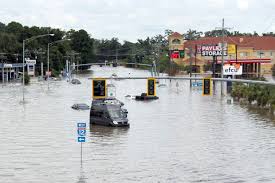
There has been an increase in our strongest hurricanes over the past few years that many believe is related to climate change. I agree with this claim. In the Atlantic alone, there is expected an 80% increase in category 4 and 5 hurricanes for the next century. With stronger storms brings heavier rain and more flooding. The most common type of flooding caused by hurricanes is coastal flooding (storm surge). For example, Hurricane Katrina brought a 28 foot storm surge with her when she made landfall in New Orleans. This major amount of flooding and heavy rain caused devastation to the people of New Orleans and killed many. By 2100 these monstrous storm surges and heavy rainfalls could get up to 17 times more frequent.

Going back to the rise in sea level, why do you think this is happening? I’ll give you a hint, it’s the title of the article. That’s right, flooding! Glaciers are melting from the Earth’s temperature rising 1.8 degrees celsius. Ocean levels have risen as high as 8 inches in some areas of the world. The predictions by 2100 go from 6 feet higher to 10 feet higher. Along with a lot of land disappearing around the world, rising sea level increases high tide flooding. Coastal areas would see a huge increase in high tide flooding that could possibly shut down multiple cities for weeks.
There are several different types of flooding. Coastal Flooding is mostly caused by storm surges and is when coastal areas around a continent become flooded from the ocean waters surrounding it. Flash Flooding is by far the most deadliest. It comes up on you fast and mostly happens from a stationary front above an area that releases mass amounts of rain causing water to build quickly, sometimes trapping people in their homes, cars, etc. without help. Agricultural Flooding is when plants absorb so much water that they drown. This normally happens with plants that can withstand frost. The snow around the plants gets rained on. The snow and rain accumulate to cause flooding on the land. Lastly, Urban Flooding is caused by failing drainage systems in an urban area. The roads and yards in the area become flooded. Urban Floods can cause significant structural damage as well.
How can you protect your house from flooding? Keep your drains and gutters free of gunk, install a pump in your basement or crawl space to pump out water, install check valves so that pipes do not backup into your home. Some people go as far as raising their house completely off the ground. Flood insurance is also another option. It is a smart way to go with protecting your home. Almost 98% of the United States gets flooding annually and this can be costly when repairs need to be made. The average cost of Flood Insurance is $1,000 a year.
Lastly, the best way you can help to prevent flooding around the world is to lower your carbon emissions. This will slow the warming of the Earth and slow everything else related to Climate Change.
Thank you for reading,
Serina K. Croyle
By Brendan Wissinger
For this blog post I will be doing something different I will be talking about how to decarbonize our electricity sector. The electricity sector is the largest greenhouse gas emitter worldwide and the second largest in the US But it may actually be one of the easiest sectors to decarbonize. (I won’t talk about industrial heat in this, that is in another blog post or my Youtube video on industry and manufacturing.)
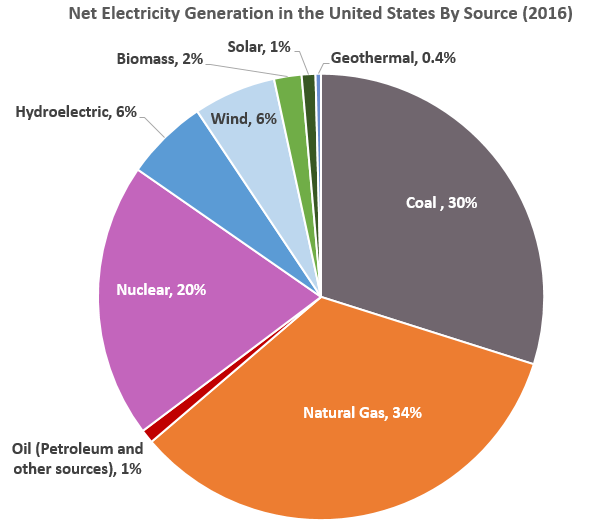
Currently in the US, Natural Gas makes up 34% of emissions, and coal makes up 30.5% of emissions, nuclear makes up 20%, and hydro makes up 6%, wind makes up 6%, solar makes up 1%, biomass makes up 2% and geothermal makes up 0.4%. To have a 50% chance of staying below 1.5 degrees we need to meet at least 50% of energy by 2030, and get 100% of our energy from clean or renewable sources before 2050.
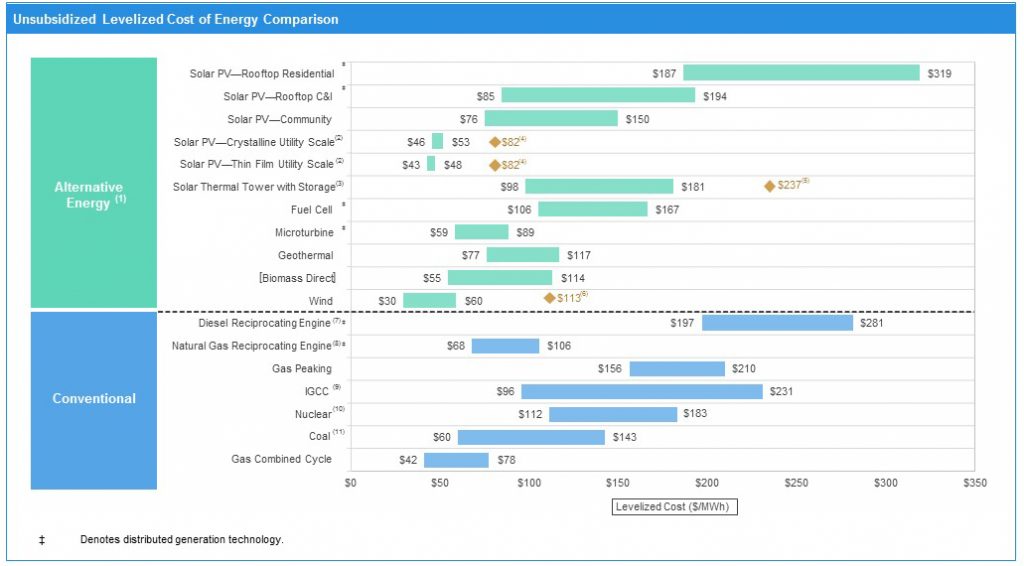
Of Renewable Energy there are several types, first of which is onshore wind. Wind power of course makes it’s energy through wind turbines, where wind turns a generator and creates electricity. On land Wind power is the cheapest of energy sources, of about $30 to $60 per MWh, or $0.037 per kW-hr. A single land-based turbine can produce 2.5-3 MW or enough electricity for 1,500 European Homes . Most wind turbines are 50% efficient meaning they extract 50% of the energy that passes through them, that doesn’t mean though that just because they are inefficient that they can produce enough power to able to solve climate change. If we used a network of 2.5 MW turbines, in 20% of the world’s open, ice-free, non-urban land areas, we would have over 40 times the global consumption of electricity. There are certain times when energy produces the most electricity. Wind turbines must be placed to maximize the energy produced from them which varies by location and away from migratory bird paths. Wind turbines are not a major cause of death of birds, the leading cause of death is windows and feral cats and habitat destruction. Window strikes kill over 976 million birds per year compared to wind turbines 33,000 birds per year. Wind is the largest Renewable Energy Source in the US.
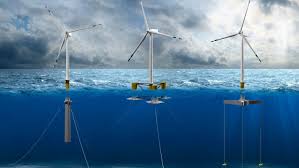
Offshore wind gives us more energy than on land wind power because wind is stronger over the Ocean. Offshore Wind Costs $0.106 per kW/hr or $120-$165 per megawatt hour. In US, wind turbines on our shorelines could provide double our current electricity use or 2,000 gigawatts. Offshore Wind, is usually closer to population centers and has more energy because winds are stronger over the sea. Offshore Wind unlike Onshore wind is more aligned with peak usage of electricity as offshore winds are strongest during the day and on land winds are strongest at night. Some platforms of Offshore Wind can float and use cables to connect to the grid. The Offshore Wind industry has faced regulatory and legal challenges in the US, unlike in Europe where it is wide spread. As of date, the US only has one offshore wind farm, and that is Block Island Wind Farm, off the coast of Block Island, Rhode Island.
The Energy source I want to talk about is Utility Scale Photovoltaic Solar Panels. Utility Scale Photovoltaic Solar Panels are solar panels that produce electricity using the solar panels for utilizes. Photovoltaic means the panels themselves produce the electricity unlike concentrated solar power. Utility Scale Photovoltaic Solar or Utility Scale Solar PV costs $0.038 per kWhr or between $43 and $53 per mWhr. In the US there are 10,000 solar projects over 1 MW. Grid Batteries may be connected to Utility Scale PV Solar to provide power at night and times of need for example the morning and evening when solar power plants give most of their energy in the mid-day. A single power plant may have hundreds of thousands to millions of solar panels. Many times the panels rotate to follow the sun, which may increase generation by 40% or higher. Large Scale Solar Projects need a large land area to provide be able to produce electricity but its not ridiculously excess. To power the world using PV solar it would require roughly the area of Spain, or about 496,805 square kilometers or 191,817 square miles, but its still doable because all of the panels are not in one place. We destroy forests at 170,000 square kilometers per year, if we constructed solar facilities at the same rate it would take just three years. Also the area of farmland in China is 2.5 times larger than the area of solar panels needed, and the Saharan Desert is 18 times the area needed to power the world. PVs covering 0.6% of the US land area would give the US enough energy. Solar Panels are inefficient, with only efficiencies of 15% to 20%, though some are being developed by an efficiency of 50%. PV solar can be placed almost anywhere, though some locations are better than others. PV produce electricity by them being semi-conducting materials that produce electrons when protons hit them. In 2018 global photovoltaic power reached 509.3 Gigawatts, which is 30 times the level in 2008. The biggest installers of solar power are the top emitters, China, then the US then India.
The Next energy source is Business and Homeowner Photovoltaics, which are pretty much the same in design as Utility Photovoltaics. Homeowners or Businesses contract companies out to install home or commercial solar systems. These can power an entire house. Some create enough energy to allow the homeowner to make a profit by selling the energy back to the grid supplying the grid with energy. Batteries may be used to store electricity for use during peak hours or at night. Scientists are trying to build home solar panels that look like normal shingles. There are also Power Purchase Agreements for these where homeowners have the panels installed by a company that charges them no upfront cost, but they have to pay an electric bill, although a smaller one. Like utility scale Solar and Wind there are federal and state incentives, including tax credits and Property Assessed Clean Energy Programs. The costs of home and business solar power is anywhere from $85 to $319 per mW-hr.
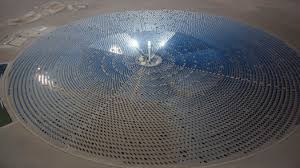
Another type of Solar Power is Concentrated Solar Power. Concentrated Solar Power works by a bunch of mirrors focusing light on a fixed point, which heats some type of heat transfer fluid, for example molten salt, then, the fluid, heats water to create steam which turns a turbine, creating electricity. The benefits include it produces power at night and during peak hours. Storage can also be combined with it to increase the amount able to be used at night. There are about 1,815 MW of electricity from CSP plants in the US. CSP plants require, sunnier weather without cog, and access to water resources. CSP plants cost from $98 to $181 per Mw-hr.
https://www.solarpowerworldonline.com/2019/07/will-floating-solar-arrays-float-or-sink/Another type is Floating Solar Arrays, which are solar panels mounted on bouys. They are usually placed on ponds, lakes and man-made reservoirs. This allows land to be used for other purposes and there is little obstruction on the water. The water underneath cools the panels allowing them to be more efficient. But floating solar is of higher cost. At the time of September 2018, the mount of floating solar worldwide was 1.1 GWs.
Then there is hydroelectric. There is actually two types of hydroelectric, the first type uses a Dam to block water, creating a Reservoir to create pressure and force it down a pipe to drive a turbine to turn a generator and create electricity. and second just uses turbines running through unobstructed streams.. Some countries have 99% or more of their energy coming from hydropower. The largest hydropower plant in the world is Three Gorges Dam, which produces 22.5 gigawatts of electricity. In Washington State, 70% of the electricity is from hydropower. In the US its about of half our renewable energy. Sometimes fish ladders are put around dams to allow fish to migrate because dams negatively affect animals that live in the dams by changing currents and disrupting or blocking migration paths and affecting water levels. Dams may also be built for flood control or for recreational reasons but they end up flooding communities upstream. Smaller hydropower structures with just a turbine and maybe a separate stream be built. These can power a small town or supply electricity to ranches and farms. A hydroelectric power plant requires a certain type of terrain. Also there is a third type of hydropower system. The third type really isn’t a power plant it’s a battery, a grid battery. It works by pumping water to a lake on the top of a hill, which takes electricity, then later, when the electricity is needed, the water is released downhill, turning a turbine creating electricity to power places at peak usage and the water goes to another reservoir. This is called “pumped storage hydropower”. Its important to note that these “pumped storage hydropower” systems actually use electricity, to power the pumps that pump water upstream.
Next is Biomass. Biomass is a power source that creates electricity from renewable organic waste for example wood scraps and yard waste. The burning of the material creates heat which heats water to create steam which turns a turbine to generate electricity. Their carbon neutral because theoretically the plants will be planted and the CO2 will be reabsorbed. Biomass does create emissions. Cutting down of forests also limits the ability of them to sequester CO2 and it also takes a while for the trees to regrow so therefore and in that time frame the emissions are still there. 46% of the biomass in the US comes from wood, 43% comes from ethanol, which competes with food crops, which creates competition to feed people. It also could also require more land for crops and therefore more trees cut down, causing emissions. One type of Biomass is used to sequester carbon, called Biomass with Carbon Capture and Storage, it creates energy through burning crops like corn, and then sequesters the emissions that the corn captured in the ground. This advantageous because corn absorbs a lot of CO2. But this technology is still extremely experimental.
Another type of Renewable Energy is Geothermal Energy. Geothermal Energy is produced by running water through wells near volcanic activity to heat up the water and create steam which drives a turbine to create electricity. Geothermal Energy costs about $77 to $117 per MW-hr. Currently there is 11,700 MW of geothermal energy across the world with, 11,700 MW more planned. In El Salvador and Iceland geothermal plants provide 25% of the electricity. The US has 3,300 MW of electricity in geothermal, most of it in California.
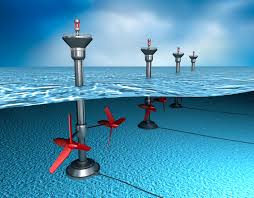
Another type of Renewable Energy is Tidal Energy. Tidal Energy is produced by the surge in water of the tides from their rise and fall. The flow of the water turns turbines, creating electricity. The more difference between low tide and high tide, the more energy but differs by location. Tidal does have some large utility scale projects around the world, but there are not many. The first one was in La Rance, France. The biggest one is in South Korea, Sihwa Lake Tidal Power Station. The US has none and very low capacity. Other countries have more of a chance to use this technology. Electricity from tidal is made in three ways, turbines that are like wind turbines, barrage which involves a dam with turbines inside it but the dam is low allowing water to go over it. The last is tidal lagoon which a manmade lagoon is used as reservoir for electricity running through turbines. (https://www.nationalgeographic.org/encyclopedia/tidal-energy/ and https://www.nrdc.org/stories/renewable-energy-clean-facts).
There are other types of Renewable Energy currently under research including Wave Energy, Ocean Thermal Energy, Enhanced Geothermal, and Artificial Photosynthesis and Solar Updraft Towers. (https://ideas.repec.org/a/eee/rensus/v71y2017icp12-28.html).
Another type of Carbon-Neutral Energy is Nuclear Energy. Nuclear Energy comes from splitting atoms in a reactor from a radioactive element like Uranium, Plutonium, or Thorium. The reaction creates heat which heats water, creating steam which turns a turbine to turn a generator and create electricity. In the US there are 96 Nuclear Reactors which supply 19% of the nation’s electricity. Nuclear is carbon neutral and creates no emissions. The splitting of the atom takes place inside a Nuclear Reactor. Almost all Nuclear Reactors use Uranium, in which its atoms are broken into “fission products”, which split other atoms creating heat. The Uranium is contained in rods, which can control how much electricity is created, these rods are also called “nuclear poison”, the more rods placed in the reactor, the less electricity is created and the more controlled the reaction. Nuclear Energy provides France, Lithuania, and Slovakia nearly all of their energy. Uranium fuel is used often because it breaks down easily. The type of Uranium used in reactors, U-235 is extremely rare. Uranium can be enriched and recycled. To build nuclear power plants a country must of signed the Nuclear Non-Proliferation Treaty. Nuclear Plants do produce waste radioactive material which is extremely toxic. Once something is radioactive it may stay radioactive for thousands of years. Nuclear fuel and rods must be contained in water pools of water to insulate them. Nuclear reactors can melt down if their cooling supplies are not maintained. This happened in Chernobyl and Fukushima. These meltdowns can leave communities radioactive . Nuclear is actually one of the safest energy sources out there, it causes less deaths than coal, oil, gas or wind. Failsafes are always being developed and implement and newer generations of reactors, like pebble bed reactors, are designed so reactions can be stopped and reactions can runaway causing a meltdown, even in the event of a complete failure of the reactor’s equipment. Other problems can be fixed by properly placing nuclear power plants in places where they are unlikely to be damaged, like away from floodplains, coast lines and fault lines. Radioactive waste should be stored in nuclear repositories away from everyone else but unfortunately, because of opposition to the transport of nuclear waste and the creation of respiratory, nuclear waste is stored in the power plants that used to power communities, leaving communities at risk (). Nuclear Costs $112 to $183 per MWhr.
Some people say that renewable energy is unreliable but evidence proves otherwise. Many countries rely on large percentages of renewable energy, for example Iceland, Paraguay, Costa Rica and Norway which power more than 97% of their countries with renewable energy and Brazil powers over 75% of its country on renewable energy and Austria makes 80% of its energy from renewable energy (https://www.resilience.org/stories/2018-05-24/a-100-renewable-grid-isnt-just-feasible-its-already-happening/).
Some people say that renewable energy costs too much, but in many places Wind ($30-$60 per MW-hr) cost less than Natural Gas ($42-$106 per MwHr) and Utility Scale Solar ($43-$53 per MwHr.) and Wind cost less than Coal ($60-$143 per Mw-Hr) (https://energyinnovation.org/2018/01/22/renewable-energy-levelized-cost-of-energy-already-cheaper-than-fossil-fuels-and-prices-keep-plunging/).
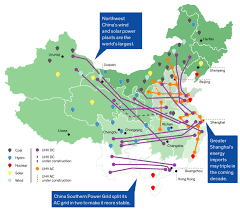
Peaking Power which variable power needed at only certain times of the day or year can be provided by a couple of things. First, the energy sources of Nuclear, and Biomass to provide power during the Winter, second, peak hours energy can be provided by a DC National Grid and Grid Storage and Solar Thermal. A DC National Grid is a grid built on top of the current grid system all over the United States using DC current to send electricity across the US. For example it would be able to send wind power from Kansas to the eastern US, allowing power from the areas with large of renewable energy to reach populated areas and it allows for more flexible, something important with renewable energy. Currently the US grid is divided into three grids, the Eastern Interconnection, Western Interconnection, and the ERCOT Interconnection (which covers Texas), and is very decentralized, a DC National Grid would connect all three of them. It is DC current because AC current would lose electricity over the extreme distance. Grid Storage, another aid in the fight against climate change would also secure peaking power. Grid Storage are giant batteries used to store electricity for the grid to use at peak hours. Types of Grid Storage include Pumped Hydroelectric Storage, Compressed Air Energy Storage, Lithium Ion Batteries, Lead Acid Batteries, and Sodium Based Batteries, Redox Flow Batteries and Zinc Air Batteries and Flywheels. (http://css.umich.edu/factsheets/us-grid-energy-storage-factsheet, https://www.nrel.gov/docs/fy19osti/74426.pdf, https://www.utilitydive.com/news/nypa-zinc-air-storage-lithium-ion-safety-concerns/571095/)
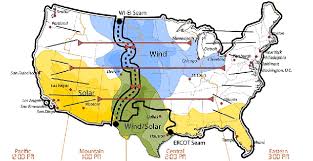
What are the negatives and benefits of Renewable Energy. Benefits of Renewable energy include no carbon emissions, and all of them but biomass don’t create pollution resulting in less deaths. Fossil Fuels cause the deaths of 10,000 people each day because of air pollution worldwide. Other positives include Renewable Energy creates more jobs per MW than fossil fuels. One study found that investing in renewable energy could lead to 40% more jobs than coal would. Negatives is that even though wind and solar cost less than coal per MW-hr, energy costs may increase (https://www.skepticalscience.com/print.php?r=371).
The best estimates for what our energy mix should look like if it was 100% renewable are 10.9% residential rooftop solar, 14.6% commercial & government rooftop solar, 16.4% solar plants, 1% wave devices, 4.7% concentrating solar plants, 0.6% geothermal, 31.4% Onshore Wind, 3.9% hydroelectric, and 16.4% offshore wind. This would create over 2 million jobs (https://thesolutionsproject.org/why-clean-energy/#/map/countries/location/USA).
So how can we get there? Here are some policies to help us get to 100% Clean Energy
First we can enact Renewable Energy Portfolio Standards or Clean Energy Mandates. Renewable Energy Portfolio Standards are a policy that requires a certain amount of energy in the certain place to come from Renewable Energy by a certain date. Over half of the states in the US have one, including Texas, Arizona, North Carolina, Virginia, Missouri, Iowa, Pennsylvania, New York, Minnesota, Ohio, Wisconsin, and Michigan. Most US states have targets that do not align with the staying below 1.5 Degrees of warming, those states are California, Vermont, Maine, New York, DC, New Jersey, Hawaii, Washington, Massachusetts, Nevada, New Mexico, and Maryland (https://www.c2es.org/document/renewable-and-alternate-energy-portfolio-standards/).

Second we can fund the buildout of Renewable Energy (for utilities and homeowners and businesses) and Grid Storage and Grid Revitalization through grants and loans, possibly through a Green Bank. Green Banks are publicly owned and capitalized banks that provide loans to green businesses and organizations or green projects. Current loan guarantees are given out by the US Department of Energy and some states like Connecticut and New York have Green Banks. Across the US there are 12 green banks . We need enough investment to provide for high cost grid storage and ramp up renewable energy from 17.5% to 81%.
Third, Currently there are federal tax credits for Renewable Energy but they are set to end in 2023. They should be made permanent. There is an Investment Tax Credit for solar and Production Tax Credit for Wind. These tax credits have helped a lot in bringing Renewable Energy to price parity with Fossil Fuels. Permanent Tax Credits should also be given to grid storage technologies (https://techcrunch.com/2019/02/15/how-to-decarbonize-america-and-the-world/).
Fourth we can ban all new fossil fuel power plants. To solve the climate crisis we need to phase out all fossil fuels, especially coal as quickly as possible. Coal needs to phased out by 2040 at the latest (which give us a low chance at meeting 1.5, so it really should be 2030). This includes power plants that have newly built, in which case compensation can be provided. But as I have said fossil fuel energy is easy enough to replace. This can be done by strict enforcement of renewable energy mandates which no cap and trade systems that sometimes come with renewable energy portfolio standards and just compensations (https://climateanalytics.org/briefings/coal-phase-out/).
Fifth, we can create stricter standards on fossil fuel power plants. Before Obama’s presidency the EPA proposed (some of which were finalized) regulations to regulate Carbon Dioxide emissions of power plants under the Clean Air Act. They were challenged in court, and the Supreme Court later affirmed that those regulations were legal in Massachusetts vs EPA in 2007. During the Obama Administration, he created the Clean Power Plan. The Clean Power Plan set limits on the amount of pollution, power plants can produce. The plan allowed each state to design its own rule and if they didn’t a federal rule would be used. The plan would have went into force by 2022. The Trump Administration shot down the Clean Power Plan. What we need is a new Clean Power Plan.
Sixth we can give subsidies to Green Energy and Nuclear Energy Industry which lower prices even further and allow these industries to expand even further. For example we subsidized many industries during WWII that were deemed national priorities. Also the fossil fuel industry got billions in subsidies, to solve this crisis we need to get rid of those fossil fuel subsidies and give them to Renewable Energy. The Federal Government could tax breaks to Green Energy and Nuclear Energy. And the Federal Reserve could help decarbonize by keeping interest rates low, and acquiring debt given to finance decarbonization, directly or from an investment bank (https://rooseveltinstitute.org/wp-content/uploads/2019/06/RI_Decarbonizing-the-US-Economy_summary_201906.pdf) (http://priceofoil.org/fossil-fuel-subsidies/).
Seventh we can do more research on grid storage., renewable energy and nuclear energy We can fund and do more research in grid storage to lower the costs of grid storage, and funding more renewable energy research can expand our renewable energy options and allow for more flexible power systems (https://www.weforum.org/agenda/2019/05/a-critical-step-to-reduce-climate-change/).
Nuclear energy is a hotly debated topic in climate change discussions, and in general as well. What if I told you there is a way to do nuclear power that is safer for people, safer for the environment, cheaper to create, and safer to distribute? That is the power of using thorium metal as the fuel source for our nuclear energy.
Let’s talk about how nuclear energy is created. Uranium metal is mined, enriched, put simply a purification of sorts, so that it freely emits energy via fission through radioactive decay. This is cooled to maintain a state that is not meltdown, and this energy is collected, and distributed as any other power would be. Each one of these steps could be improved upon by the utilization of thorium in place of uranium. Once the metal is ready for use, the reactor generates nuclear fission, which is where one larger atom splits into two smaller atoms. This releases high-energy particles that are collected by the reactor, and the energy is siphoned and distributed as any other electricity. Figure 1 shows the sequence of decay for both thorium and uranium. As can be seen through this figure, thorium will decay into something stable significantly faster than uranium. Another thing that is a little harder to know, is that the materials thorium breaks down into are significantly less intense than those of uranium’s.
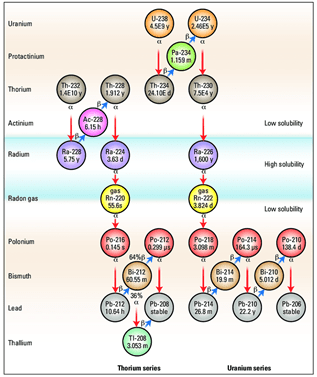
Figure 1: A chart shows the decay sequences of Uranium and Thorium. Courtesy of Nelson et al. via ResearchGate.
We’ll start with the acquisition of the metal itself. Thorium is more prevalent in the Earth’s crust in general, and it is also more concentrated in its ores as well. This means that, ounce for ounce, you would get more thorium than uranium from their ores. This would be more cost efficient because less mining and processing would need to be done to get the same amount of nuclear fuel. Keeping in mind that mining and processing damages the environment and creates greenhouse gasses, it has secondary benefits to climate change from the reduction of the mining effort.
On to the big one: safety. This metal is safer to use at every step or consideration. The way it creates energy is a little different. Uranium releases energy constantly by itself, unaided. Thorium is more stable, and requires the aid of a small amount of a more unstable material to agitate it. This is usually accomplished with a small amount of manufactured plutonium. This system is the source of the extra safety. Let’s say the cooling system fails due to some natural disaster. The uranium keeps emitting, without energy being collected, which leads to a buildup of heat, ultimately leading to a meltdown. As thorium heats up, it will melt, and fall away from its plutonium agitator, thus stopping the outflow of energy, stopping the meltdown. Figure 2 shows how the meltdown of uranium plants occurs.
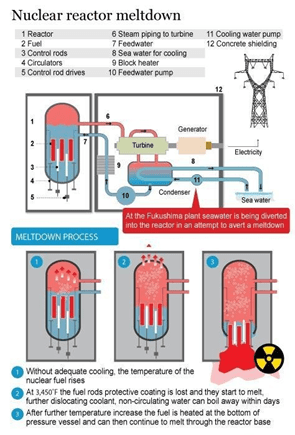
Figure 2: A diagram of how the meltdown at Fukushima happened. This is analogous to most meltdowns. Courtesy of NBC News.
To sum up, using thorium metal instead of uranium metal would be the by far better method of generating nuclear power. Thorium mining is a less intensive process, and doesn’t require nearly as much refinement of enrichment, and every step of this process is better for emissions and environmental destruction. The metal is all around safer for people and the environment, as it cannot meltdown in properly designed facilities, and it cannot be effectively weaponized. Uranium only persists due to the military industrial complex of the Cold War era, where weaponization was the primary consideration, and the energy was a side-effect. I think it’s time we made the switch.
Information Sources:
Source 1: Katusa, M., 2012: The Thing About Thorium: Why The Better Nuclear Fuel May Not Get A Chance. Forbes Business https://www.forbes.com/sites/energysource/2012/02/16/the-thing-about-thorium-why-the-better-nuclear-fuel-may-not-get-a-chance/#43130cbd1d80
Image Sources:
Figure 1:
Nelson A.W. et al., 2015: Understanding the Radioactive Ingrowth and Decay of Naturally Occurring Radioactive Materials in the Environment: An Analysis of Produced Fluids from the Marcellus Shale, Environmental Health Perspectives, 129. https://www.researchgate.net/publication/274400298_Understanding_the_Radioactive_Ingrowth_and_Decay_of_Naturally_Occurring_Radioactive_Materials_in_the_Environment_An_Analysis_of_Produced_Fluids_from_the_Marcellus_Shale
Figure 2: Boyle, A., 2011: If there’s a Meltdown, Then What?, https://www.nbcnews.com/science/cosmic-log/if-theres-meltdown-then-what-flna6C10403315
How is Climate Change Affecting Your Allergies?
Have your allergies been worse lately? There are many climate induced factors that could be affecting your sinuses. Pollen counts have been steadily increasing over the last 20+ years, this is due to higher temperatures and higher levels of carbon dioxide in the air. Scientists predict that average pollen counts in 2040 will be more than double of what they were in 2000, so what does this mean?
First, climate change variably affects the production, and protein composition of pollen and fungal spores. The way that pollen is transported and dispersed can also be affected by several changing meteorological factors such as rainfall, and wind. Climate changes may also impact the pollen season of trees and weeds by extending the pollen season and increasing the amount of pollen produced. You can see in the graph below that since 1970 to 2017, the growing season has increased by 100 days, ultimately increasing the allergy season.

heres-how-frost-free-season-affects-allergy-season
Climate change can also result in an increase of severe storms and flooding. Flooding can cause mold build up in places like restaurants or other buildings which could also trigger an allergic reaction.
Who is More Susceptible?
Some groups are more inclined to have allergic reactions to these types of triggers. These groups include people with allergic disorders such as rhinitis, conjunctivitis, and asthma. Some other groups would be children, the elderly, or anyone else who may have preexisting reactive airway diseases. Children who have Hay Fever can be especially susceptible as an increase of pollen can cause their allergic reactions to become worse. Greenhouse gases in general are also capable of triggering respiratory symptoms in people with asthma or chronic obstructive lung disease, so it’s important to pay attention to what we are putting in the atmosphere
Conclusion
As long as the impacts of climate change continue, temperatures will continue to increase along with the growing season, and we will continue to see an increase in allergic reactions. If climate change does not affect you personally, it is important to take the extra step and think about who around you it may be affecting.
Sources:
A common argument given by the denialist sect of people is the we can’t trust forecast modeling because everyday weather modeling isn’t accurate. Forecast modeling both for the climate and the weather, which are not exactly the same thing, can be complex to understand, and frankly, a bit boring to look at the machinations of, if that isn’t your kind of thing. My goal here is to summarize the differences and similarities of the two models, go over the kind of math involved (mostly statistical analysis), and generally dispel the attitude that forecaster don’t have any idea what is going to happen.
Let’s define what models are, and the differences between them. A model can be thought of, most simply, as a computer simulation. You enter data in, the computer stores and processes it, and then returns a model simulation. Models are used in just about every field that involves any kind of remotely intensive mathematics and/or scientific concepts. These include, but are not limited to: engineering, medicine, astronomy, economics, and, of course, climatology and meteorology, the issue currently at hand. The primary difference between meteorological and climatological models is time they run over. Meteorological models only run for a week or so, with some being ran longer. Whereas, climatological models are running for decades and centuries. The relatively short run time for meteorological models means that they can safely negate changes that take years to occur, like plate tectonics for instance. Neglecting the long-term changes simplifies the data the computer has to process, meaning you get models more efficiently and cheaper. We could run basic weather models with all this accounted for, but it likely won’t change the outcome, just make your daily weather app a lot more expensive. Climatological models do account for a host of long-term variables, including sea levels, ocean circulation patterns, solar cycles, amount of present forest and ice. These are important because climatological models run over a longtime, and neglecting these factors would make the model inaccurate.
Further into weather model accuracy, people often neglect to realize that almost everything done in these models is running on statistical chances, not the ‘it will or it won’t’ dichotomy. The 60% chance of rain in your forecast is more accurately described as “it is likely that 60% of this geographical area will have rain during a certain length of time as calculated through a confidence interval”. The size of the geographic areas are determined by the meteorologist’s needs and a confidence interval is a method of statistical analysis used to determine the likelihood of an event occurring within specified parameters to a certain degree, conventionally this is 95% certainty, but could be anywhere from 90 to 99.5 percent certainty. This mathematic method does not allow for 100% certainty, as you would need infinite area and time to achieve full confidence. This is why 100% or 0% pop up rather infrequently in weather forecasts.
The main method of model testing is to run the model and then compare it to what happens in real life. When you are modelling specifically for the future though, you can’t do this as much. Climate models run over decades or centuries, waiting for them to fully be tested via observation of real life would be extremely dangerous and impractical. Short term observations do tend to match up with the models, which lends enough credence, as waiting over century to check them in real life would probably result in the creation of new Atlantis-es, when most coastal cities are below water. When it comes to situations where millions of people could be seriously and adversely affected, it’s better to get the information out there for mitigation, than to just pass time to wait and see. For an example of a detailed climate model, see Figure 1.
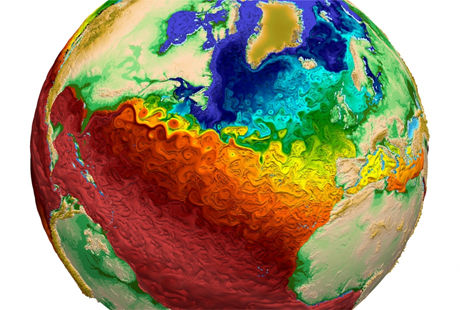
Figure 1: An advanced climate model showing temperature and currents in the ocean. This is the detail that new models are developing. Courtesy of Climate Central.
In conclusion, climate modeling, and weather modeling, is complex process that accurately describes what we can expect to occur. Theses models are analyzed via statistical methods, and are programmed to give results in those. Statistically speaking, 100% and 0% are almost never correct answers, and even high confidence results have a necessary amount of variance to them. These models are limited by the amount of available data and computer power, both of which are limited primarily by available funding, what isn’t. So, if those last fractions of a degree of accuracy are important to you, you could help gain those by funding further studies into this phenomenon.
Image Source: Figure 1: https://www.climatecentral.org/news/one-image-future-climate-models-18844

 Global Climate Change and Society