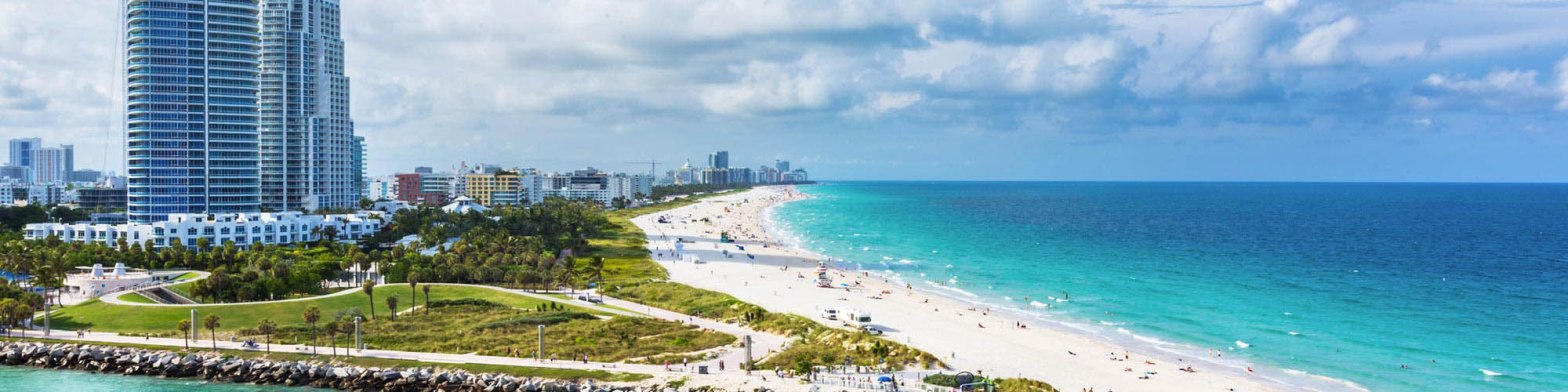
When a North American vacation is in mind, most think of relaxing on a beach with the water near and clear. Florida is a large tourist attraction in our country due to its many beaches. With the state actually being a peninsula, it provides availability to many beautiful, coastal views that are more than exceptional for vacationing. I hope to bring some vitamin D to you as we discuss this matter in hopes that we will be able to have a beautiful, bright summer full of vacations and memories after the quarantine is lifted. However, as our planet continues to experience a change in climate, have you ever pondered what the outcome might be for coastal attractions such as Florida? Will sea level rise make this location difficult to maintain? Throughout this blog post, I will be addressing sea level rise, its causes, and its specific impact on Florida.
What Causes Sea Level Rise?
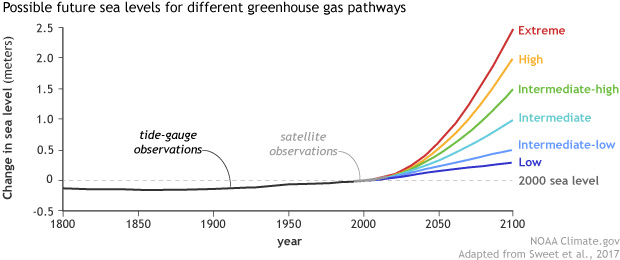
National Oceanic and Atmospheric Administration (NOAA) notes that global sea level is on the rise and has already set astounding records. As of 2014, sea level was measured to be 2.6 inches overall higher than the average in 1993. The two major causes of sea level rise highlighted among others are thermal expansion and increased melting of land based ice (click here for more information on other causes).
Thermal expansion is a result of water expanding when it experiences an influx of energy. The land based ice population includes glaciers and ice sheets, with both of these features experiencing more melting each year, they contribute to global sea level rise. Therefore, it is estimated that our oceans are absorbing 90% of the increased atmospheric heat that results from greenhouse gas emissions. This is a large number that must be cut down soon before too many damaging results occur.
What are the Consequences?
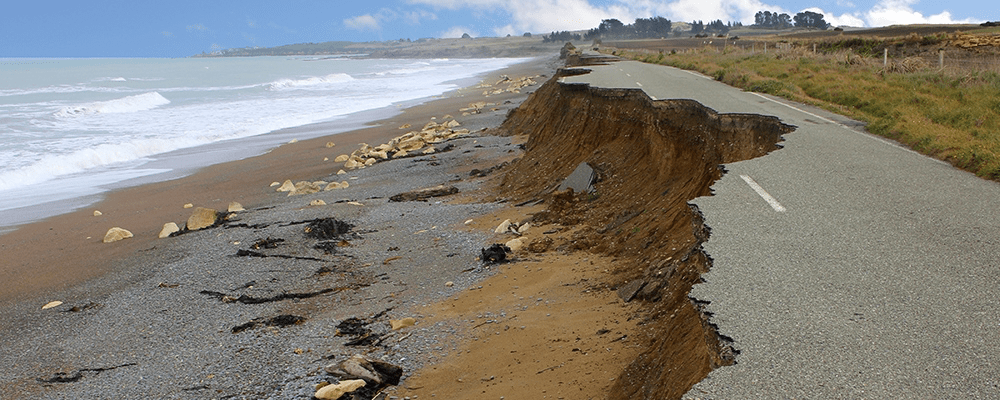
Not all locations will experience the same outcomes of sea level rise. Those countries that are low-lying, in terms of sea level, are at the highest risk of the outcomes. Speaking in terms of the United States, a decent percentage of our coastal locations are home to large populations, so this poses a threat to large parts of our society as well. Sea level rise will definitely lead to more frequent severe flooding, especially that of high tide flooding and storm surges. In return, this flooding can be damaging to infrastructure, roads, subways, gas wells and water supplies. As I mentioned in one of my previous blogs, floods can impact our sanitation systems and allow water borne illnesses to thrive and spread throughout the human and animal populations. In addition to damage and health, frequent floods can amount to any of these subjects affecting the employment status of many coastal residents, causing their local economies to suffer (click here to learn more). Additionally, Florida is a tourist attraction in terms of year round vacationing. This allows Florida’s economy to rely somewhat on tourism, and with rising sea level, tourism will decrease leaving their economy to suffer from its loss.
Speaking in Terms of Florida…
With the state of Florida being a peninsula that resides on the south eastern corner of the United States, it is prone to seeing the shore lines rise easily. As of now, sea levels are up to nearly 8 inches higher than they were in 1950, leaving 120,000 Florida properties at risk of tidal based flooding. Most of the flooding occurs in the late summer and fall months for two reasons. One being that the months of August – November are hosts of North America’s hurricane season, which brings an abundance of precipitation to the state if the storm makes landfall near. On the other hand, the gravitational pull of the sun and moon drags the water farther inland. Tides known as “king tides” can occur and be nearly 12 inches higher than regular tides. This puts this low-lying state at more of a risk during the fall months.
What About the Beaches?
Based on satellite data from the range of 1984 – 2016, shorelines have dissipated at a rate of more than 0.5 m per year. This amounts to the sea claiming more than 28,000 square kilometers of land. Beaches are at risk of eroding completely. As I mentioned above, most of North America’s coastal locations are developed and serve as home to large cities or nearby infrastructure. Development along coastlines acts as a sudden barrier to coastal retreat and prevents the shorelines of beaches from moving inward as sea level rises. Additionally, the fact that waves and currents displace the sand of beaches can add to the risk of extinction of our country’s beaches.
Florida’s Fight
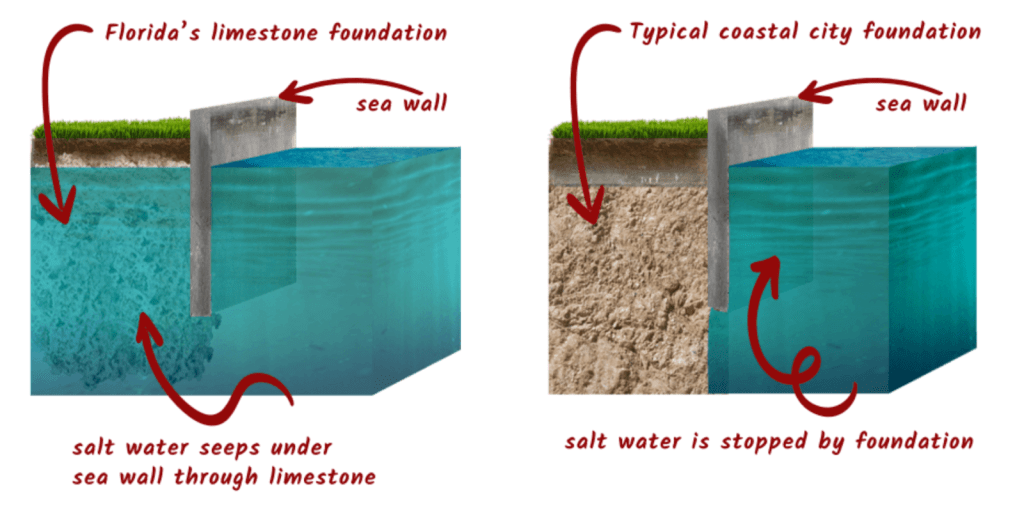
Just like any other complex problem, there is not a single solution that will solve Florida’s sea level rise issue. As of now, the state is looking at plans that will amount to $4 million to implement and put to trial. Most coastal states would go about construction of sea level walls. However, Florida contains porous limestone beneath its surface, and this material is not ideal for construction. The limestone appears to be sponge-like and would allow for groundwater to rise at the same rate of the ocean. As of right now, the southernmost county of Florida is planning to abandon miles worth of roadways if funds cannot be secured to protect them from sea level rise.
Final Thoughts
Many sources have confirmed that sea level is rising and will pose threats to many residents and structures. There are too many consequences that come with sea level rise, especially to those who reside on or near a coastline. This is yet another example of how our actions in relation to greenhouse gas emissions can impact every aspect of our lives. Tropical beach vacations may no longer be an option if this trend continues. We also need to think from an economical standpoint and how many coastal states rely heavily on tourism. All in all, the outlook is not great for our beach population. Therefore, we must make changes that way we all have a beach to visit upon closure of quarantine!
Signing off
-Shannon
 Global Climate Change and Society
Wow! I didn’t realize we were losing beaches at such a precipitous rate. Definitely something to consider.
LikeLike
Beth,
Thank you for reading my blog and leaving a comment! This fact is definitely alarming and something we all need to consider when it comes to emissions! I’m glad you understand its importance!
Stay safe and healthy!
LikeLike
Those were interesting facts. I didn’t know there were so many factors regarding the shrinking beaches and coastal shores. The melting glaciers, the slowing of the Gulf Stream and the greenhouse effect on the oceans. They were all very well explained and I learned a lot from reading this.
LikeLike
Thank you for taking the time to read and leave a comment! Our emissions have so many lasting impacts that are hard to even think about and comprehend. This is yet another one. Hopefully we will see some changes soon!
LikeLike
I have read about our coasts in this country eventually being under water some day. I knew a lot of it had to do with ice melt but didn’t realize the other causes of us losing our coasts. We really need to think seriously about climate change and the consequences of not doing anything!
LikeLike
Marge,
Thank you for reading my blog and leaving a comment! I’m glad that you were aware of this issue and one of its sources. Unfortunately, this is the result of our actions as a whole! I agree that we really do need to become more aware and act accordingly!
Stay safe and healthy!
LikeLike
Great article!!! I would hate to see this happen. Would of never noticed this when at the beach glad I read the article.
LikeLike
Missy,
Thank you for taking the time to read and comment on this post! Having our coastlines disappear would be tragic to many, especially those that live there! I’m glad you learned from this article and are now aware of how our coasts can be impacted by sea level rise. Hopefully, we will see some positive changes soon!
Stay safe and healthy!
LikeLike