By Brendan Wissinger
For this blog post I will be doing something different I will be talking about how to decarbonize our electricity sector. The electricity sector is the largest greenhouse gas emitter worldwide and the second largest in the US But it may actually be one of the easiest sectors to decarbonize. (I won’t talk about industrial heat in this, that is in another blog post or my Youtube video on industry and manufacturing.)
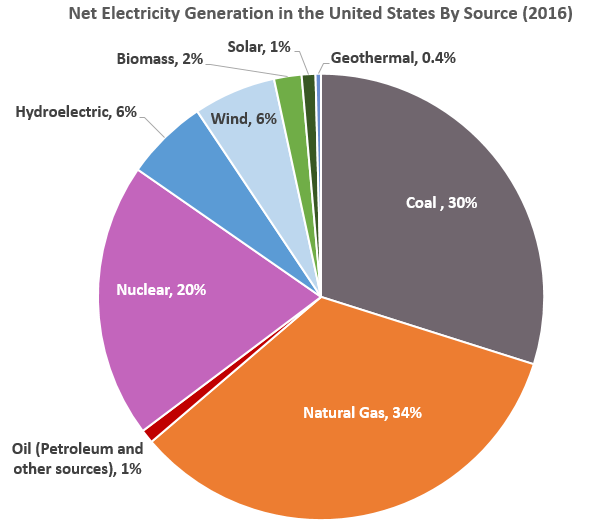
Currently in the US, Natural Gas makes up 34% of emissions, and coal makes up 30.5% of emissions, nuclear makes up 20%, and hydro makes up 6%, wind makes up 6%, solar makes up 1%, biomass makes up 2% and geothermal makes up 0.4%. To have a 50% chance of staying below 1.5 degrees we need to meet at least 50% of energy by 2030, and get 100% of our energy from clean or renewable sources before 2050.
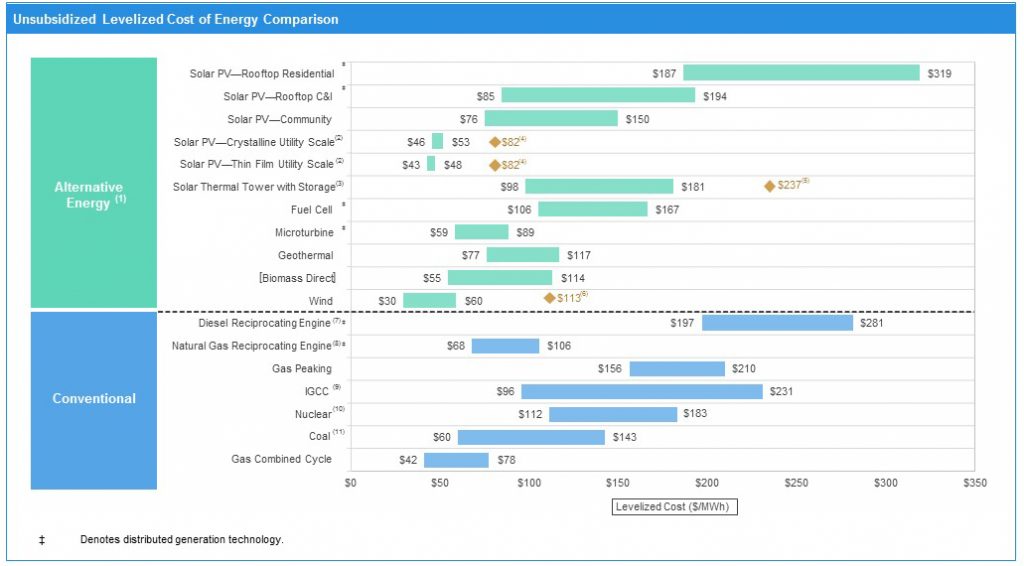
Of Renewable Energy there are several types, first of which is onshore wind. Wind power of course makes it’s energy through wind turbines, where wind turns a generator and creates electricity. On land Wind power is the cheapest of energy sources, of about $30 to $60 per MWh, or $0.037 per kW-hr. A single land-based turbine can produce 2.5-3 MW or enough electricity for 1,500 European Homes . Most wind turbines are 50% efficient meaning they extract 50% of the energy that passes through them, that doesn’t mean though that just because they are inefficient that they can produce enough power to able to solve climate change. If we used a network of 2.5 MW turbines, in 20% of the world’s open, ice-free, non-urban land areas, we would have over 40 times the global consumption of electricity. There are certain times when energy produces the most electricity. Wind turbines must be placed to maximize the energy produced from them which varies by location and away from migratory bird paths. Wind turbines are not a major cause of death of birds, the leading cause of death is windows and feral cats and habitat destruction. Window strikes kill over 976 million birds per year compared to wind turbines 33,000 birds per year. Wind is the largest Renewable Energy Source in the US.
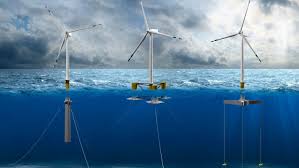
Offshore wind gives us more energy than on land wind power because wind is stronger over the Ocean. Offshore Wind Costs $0.106 per kW/hr or $120-$165 per megawatt hour. In US, wind turbines on our shorelines could provide double our current electricity use or 2,000 gigawatts. Offshore Wind, is usually closer to population centers and has more energy because winds are stronger over the sea. Offshore Wind unlike Onshore wind is more aligned with peak usage of electricity as offshore winds are strongest during the day and on land winds are strongest at night. Some platforms of Offshore Wind can float and use cables to connect to the grid. The Offshore Wind industry has faced regulatory and legal challenges in the US, unlike in Europe where it is wide spread. As of date, the US only has one offshore wind farm, and that is Block Island Wind Farm, off the coast of Block Island, Rhode Island.
The Energy source I want to talk about is Utility Scale Photovoltaic Solar Panels. Utility Scale Photovoltaic Solar Panels are solar panels that produce electricity using the solar panels for utilizes. Photovoltaic means the panels themselves produce the electricity unlike concentrated solar power. Utility Scale Photovoltaic Solar or Utility Scale Solar PV costs $0.038 per kWhr or between $43 and $53 per mWhr. In the US there are 10,000 solar projects over 1 MW. Grid Batteries may be connected to Utility Scale PV Solar to provide power at night and times of need for example the morning and evening when solar power plants give most of their energy in the mid-day. A single power plant may have hundreds of thousands to millions of solar panels. Many times the panels rotate to follow the sun, which may increase generation by 40% or higher. Large Scale Solar Projects need a large land area to provide be able to produce electricity but its not ridiculously excess. To power the world using PV solar it would require roughly the area of Spain, or about 496,805 square kilometers or 191,817 square miles, but its still doable because all of the panels are not in one place. We destroy forests at 170,000 square kilometers per year, if we constructed solar facilities at the same rate it would take just three years. Also the area of farmland in China is 2.5 times larger than the area of solar panels needed, and the Saharan Desert is 18 times the area needed to power the world. PVs covering 0.6% of the US land area would give the US enough energy. Solar Panels are inefficient, with only efficiencies of 15% to 20%, though some are being developed by an efficiency of 50%. PV solar can be placed almost anywhere, though some locations are better than others. PV produce electricity by them being semi-conducting materials that produce electrons when protons hit them. In 2018 global photovoltaic power reached 509.3 Gigawatts, which is 30 times the level in 2008. The biggest installers of solar power are the top emitters, China, then the US then India.
The Next energy source is Business and Homeowner Photovoltaics, which are pretty much the same in design as Utility Photovoltaics. Homeowners or Businesses contract companies out to install home or commercial solar systems. These can power an entire house. Some create enough energy to allow the homeowner to make a profit by selling the energy back to the grid supplying the grid with energy. Batteries may be used to store electricity for use during peak hours or at night. Scientists are trying to build home solar panels that look like normal shingles. There are also Power Purchase Agreements for these where homeowners have the panels installed by a company that charges them no upfront cost, but they have to pay an electric bill, although a smaller one. Like utility scale Solar and Wind there are federal and state incentives, including tax credits and Property Assessed Clean Energy Programs. The costs of home and business solar power is anywhere from $85 to $319 per mW-hr.
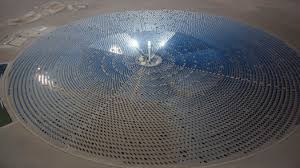
Another type of Solar Power is Concentrated Solar Power. Concentrated Solar Power works by a bunch of mirrors focusing light on a fixed point, which heats some type of heat transfer fluid, for example molten salt, then, the fluid, heats water to create steam which turns a turbine, creating electricity. The benefits include it produces power at night and during peak hours. Storage can also be combined with it to increase the amount able to be used at night. There are about 1,815 MW of electricity from CSP plants in the US. CSP plants require, sunnier weather without cog, and access to water resources. CSP plants cost from $98 to $181 per Mw-hr.
https://www.solarpowerworldonline.com/2019/07/will-floating-solar-arrays-float-or-sink/Another type is Floating Solar Arrays, which are solar panels mounted on bouys. They are usually placed on ponds, lakes and man-made reservoirs. This allows land to be used for other purposes and there is little obstruction on the water. The water underneath cools the panels allowing them to be more efficient. But floating solar is of higher cost. At the time of September 2018, the mount of floating solar worldwide was 1.1 GWs.
Then there is hydroelectric. There is actually two types of hydroelectric, the first type uses a Dam to block water, creating a Reservoir to create pressure and force it down a pipe to drive a turbine to turn a generator and create electricity. and second just uses turbines running through unobstructed streams.. Some countries have 99% or more of their energy coming from hydropower. The largest hydropower plant in the world is Three Gorges Dam, which produces 22.5 gigawatts of electricity. In Washington State, 70% of the electricity is from hydropower. In the US its about of half our renewable energy. Sometimes fish ladders are put around dams to allow fish to migrate because dams negatively affect animals that live in the dams by changing currents and disrupting or blocking migration paths and affecting water levels. Dams may also be built for flood control or for recreational reasons but they end up flooding communities upstream. Smaller hydropower structures with just a turbine and maybe a separate stream be built. These can power a small town or supply electricity to ranches and farms. A hydroelectric power plant requires a certain type of terrain. Also there is a third type of hydropower system. The third type really isn’t a power plant it’s a battery, a grid battery. It works by pumping water to a lake on the top of a hill, which takes electricity, then later, when the electricity is needed, the water is released downhill, turning a turbine creating electricity to power places at peak usage and the water goes to another reservoir. This is called “pumped storage hydropower”. Its important to note that these “pumped storage hydropower” systems actually use electricity, to power the pumps that pump water upstream.
Next is Biomass. Biomass is a power source that creates electricity from renewable organic waste for example wood scraps and yard waste. The burning of the material creates heat which heats water to create steam which turns a turbine to generate electricity. Their carbon neutral because theoretically the plants will be planted and the CO2 will be reabsorbed. Biomass does create emissions. Cutting down of forests also limits the ability of them to sequester CO2 and it also takes a while for the trees to regrow so therefore and in that time frame the emissions are still there. 46% of the biomass in the US comes from wood, 43% comes from ethanol, which competes with food crops, which creates competition to feed people. It also could also require more land for crops and therefore more trees cut down, causing emissions. One type of Biomass is used to sequester carbon, called Biomass with Carbon Capture and Storage, it creates energy through burning crops like corn, and then sequesters the emissions that the corn captured in the ground. This advantageous because corn absorbs a lot of CO2. But this technology is still extremely experimental.
Another type of Renewable Energy is Geothermal Energy. Geothermal Energy is produced by running water through wells near volcanic activity to heat up the water and create steam which drives a turbine to create electricity. Geothermal Energy costs about $77 to $117 per MW-hr. Currently there is 11,700 MW of geothermal energy across the world with, 11,700 MW more planned. In El Salvador and Iceland geothermal plants provide 25% of the electricity. The US has 3,300 MW of electricity in geothermal, most of it in California.
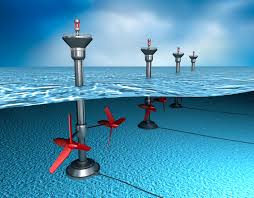
Another type of Renewable Energy is Tidal Energy. Tidal Energy is produced by the surge in water of the tides from their rise and fall. The flow of the water turns turbines, creating electricity. The more difference between low tide and high tide, the more energy but differs by location. Tidal does have some large utility scale projects around the world, but there are not many. The first one was in La Rance, France. The biggest one is in South Korea, Sihwa Lake Tidal Power Station. The US has none and very low capacity. Other countries have more of a chance to use this technology. Electricity from tidal is made in three ways, turbines that are like wind turbines, barrage which involves a dam with turbines inside it but the dam is low allowing water to go over it. The last is tidal lagoon which a manmade lagoon is used as reservoir for electricity running through turbines. (https://www.nationalgeographic.org/encyclopedia/tidal-energy/ and https://www.nrdc.org/stories/renewable-energy-clean-facts).
There are other types of Renewable Energy currently under research including Wave Energy, Ocean Thermal Energy, Enhanced Geothermal, and Artificial Photosynthesis and Solar Updraft Towers. (https://ideas.repec.org/a/eee/rensus/v71y2017icp12-28.html).
Another type of Carbon-Neutral Energy is Nuclear Energy. Nuclear Energy comes from splitting atoms in a reactor from a radioactive element like Uranium, Plutonium, or Thorium. The reaction creates heat which heats water, creating steam which turns a turbine to turn a generator and create electricity. In the US there are 96 Nuclear Reactors which supply 19% of the nation’s electricity. Nuclear is carbon neutral and creates no emissions. The splitting of the atom takes place inside a Nuclear Reactor. Almost all Nuclear Reactors use Uranium, in which its atoms are broken into “fission products”, which split other atoms creating heat. The Uranium is contained in rods, which can control how much electricity is created, these rods are also called “nuclear poison”, the more rods placed in the reactor, the less electricity is created and the more controlled the reaction. Nuclear Energy provides France, Lithuania, and Slovakia nearly all of their energy. Uranium fuel is used often because it breaks down easily. The type of Uranium used in reactors, U-235 is extremely rare. Uranium can be enriched and recycled. To build nuclear power plants a country must of signed the Nuclear Non-Proliferation Treaty. Nuclear Plants do produce waste radioactive material which is extremely toxic. Once something is radioactive it may stay radioactive for thousands of years. Nuclear fuel and rods must be contained in water pools of water to insulate them. Nuclear reactors can melt down if their cooling supplies are not maintained. This happened in Chernobyl and Fukushima. These meltdowns can leave communities radioactive . Nuclear is actually one of the safest energy sources out there, it causes less deaths than coal, oil, gas or wind. Failsafes are always being developed and implement and newer generations of reactors, like pebble bed reactors, are designed so reactions can be stopped and reactions can runaway causing a meltdown, even in the event of a complete failure of the reactor’s equipment. Other problems can be fixed by properly placing nuclear power plants in places where they are unlikely to be damaged, like away from floodplains, coast lines and fault lines. Radioactive waste should be stored in nuclear repositories away from everyone else but unfortunately, because of opposition to the transport of nuclear waste and the creation of respiratory, nuclear waste is stored in the power plants that used to power communities, leaving communities at risk (). Nuclear Costs $112 to $183 per MWhr.
Some people say that renewable energy is unreliable but evidence proves otherwise. Many countries rely on large percentages of renewable energy, for example Iceland, Paraguay, Costa Rica and Norway which power more than 97% of their countries with renewable energy and Brazil powers over 75% of its country on renewable energy and Austria makes 80% of its energy from renewable energy (https://www.resilience.org/stories/2018-05-24/a-100-renewable-grid-isnt-just-feasible-its-already-happening/).
Some people say that renewable energy costs too much, but in many places Wind ($30-$60 per MW-hr) cost less than Natural Gas ($42-$106 per MwHr) and Utility Scale Solar ($43-$53 per MwHr.) and Wind cost less than Coal ($60-$143 per Mw-Hr) (https://energyinnovation.org/2018/01/22/renewable-energy-levelized-cost-of-energy-already-cheaper-than-fossil-fuels-and-prices-keep-plunging/).
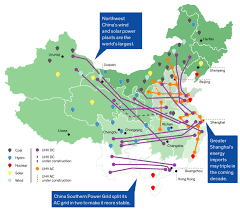
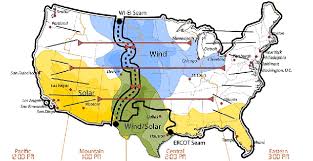
Peaking Power which variable power needed at only certain times of the day or year can be provided by a couple of things. First, the energy sources of Nuclear, and Biomass to provide power during the Winter, second, peak hours energy can be provided by a DC National Grid and Grid Storage and Solar Thermal. A DC National Grid is a grid built on top of the current grid system all over the United States using DC current to send electricity across the US. For example it would be able to send wind power from Kansas to the eastern US, allowing power from the areas with large of renewable energy to reach populated areas and it allows for more flexible, something important with renewable energy. Currently the US grid is divided into three grids, the Eastern Interconnection, Western Interconnection, and the ERCOT Interconnection (which covers Texas), and is very decentralized, a DC National Grid would connect all three of them. It is DC current because AC current would lose electricity over the extreme distance. Grid Storage, another aid in the fight against climate change would also secure peaking power. Grid Storage are giant batteries used to store electricity for the grid to use at peak hours. Types of Grid Storage include Pumped Hydroelectric Storage, Compressed Air Energy Storage, Lithium Ion Batteries, Lead Acid Batteries, and Sodium Based Batteries, Redox Flow Batteries and Zinc Air Batteries and Flywheels. (http://css.umich.edu/factsheets/us-grid-energy-storage-factsheet, https://www.nrel.gov/docs/fy19osti/74426.pdf, https://www.utilitydive.com/news/nypa-zinc-air-storage-lithium-ion-safety-concerns/571095/)
What are the negatives and benefits of Renewable Energy. Benefits of Renewable energy include no carbon emissions, and all of them but biomass don’t create pollution resulting in less deaths. Fossil Fuels cause the deaths of 10,000 people each day because of air pollution worldwide. Other positives include Renewable Energy creates more jobs per MW than fossil fuels. One study found that investing in renewable energy could lead to 40% more jobs than coal would. Negatives is that even though wind and solar cost less than coal per MW-hr, energy costs may increase (https://www.skepticalscience.com/print.php?r=371).
The best estimates for what our energy mix should look like if it was 100% renewable are 10.9% residential rooftop solar, 14.6% commercial & government rooftop solar, 16.4% solar plants, 1% wave devices, 4.7% concentrating solar plants, 0.6% geothermal, 31.4% Onshore Wind, 3.9% hydroelectric, and 16.4% offshore wind. This would create over 2 million jobs (https://thesolutionsproject.org/why-clean-energy/#/map/countries/location/USA).
So how can we get there? Here are some policies to help us get to 100% Clean Energy
First we can enact Renewable Energy Portfolio Standards or Clean Energy Mandates. Renewable Energy Portfolio Standards are a policy that requires a certain amount of energy in the certain place to come from Renewable Energy by a certain date. Over half of the states in the US have one, including Texas, Arizona, North Carolina, Virginia, Missouri, Iowa, Pennsylvania, New York, Minnesota, Ohio, Wisconsin, and Michigan. Most US states have targets that do not align with the staying below 1.5 Degrees of warming, those states are California, Vermont, Maine, New York, DC, New Jersey, Hawaii, Washington, Massachusetts, Nevada, New Mexico, and Maryland (https://www.c2es.org/document/renewable-and-alternate-energy-portfolio-standards/).

Second we can fund the buildout of Renewable Energy (for utilities and homeowners and businesses) and Grid Storage and Grid Revitalization through grants and loans, possibly through a Green Bank. Green Banks are publicly owned and capitalized banks that provide loans to green businesses and organizations or green projects. Current loan guarantees are given out by the US Department of Energy and some states like Connecticut and New York have Green Banks. Across the US there are 12 green banks . We need enough investment to provide for high cost grid storage and ramp up renewable energy from 17.5% to 81%.
Third, Currently there are federal tax credits for Renewable Energy but they are set to end in 2023. They should be made permanent. There is an Investment Tax Credit for solar and Production Tax Credit for Wind. These tax credits have helped a lot in bringing Renewable Energy to price parity with Fossil Fuels. Permanent Tax Credits should also be given to grid storage technologies (https://techcrunch.com/2019/02/15/how-to-decarbonize-america-and-the-world/).
Fourth we can ban all new fossil fuel power plants. To solve the climate crisis we need to phase out all fossil fuels, especially coal as quickly as possible. Coal needs to phased out by 2040 at the latest (which give us a low chance at meeting 1.5, so it really should be 2030). This includes power plants that have newly built, in which case compensation can be provided. But as I have said fossil fuel energy is easy enough to replace. This can be done by strict enforcement of renewable energy mandates which no cap and trade systems that sometimes come with renewable energy portfolio standards and just compensations (https://climateanalytics.org/briefings/coal-phase-out/).
Fifth, we can create stricter standards on fossil fuel power plants. Before Obama’s presidency the EPA proposed (some of which were finalized) regulations to regulate Carbon Dioxide emissions of power plants under the Clean Air Act. They were challenged in court, and the Supreme Court later affirmed that those regulations were legal in Massachusetts vs EPA in 2007. During the Obama Administration, he created the Clean Power Plan. The Clean Power Plan set limits on the amount of pollution, power plants can produce. The plan allowed each state to design its own rule and if they didn’t a federal rule would be used. The plan would have went into force by 2022. The Trump Administration shot down the Clean Power Plan. What we need is a new Clean Power Plan.
Sixth we can give subsidies to Green Energy and Nuclear Energy Industry which lower prices even further and allow these industries to expand even further. For example we subsidized many industries during WWII that were deemed national priorities. Also the fossil fuel industry got billions in subsidies, to solve this crisis we need to get rid of those fossil fuel subsidies and give them to Renewable Energy. The Federal Government could tax breaks to Green Energy and Nuclear Energy. And the Federal Reserve could help decarbonize by keeping interest rates low, and acquiring debt given to finance decarbonization, directly or from an investment bank (https://rooseveltinstitute.org/wp-content/uploads/2019/06/RI_Decarbonizing-the-US-Economy_summary_201906.pdf) (http://priceofoil.org/fossil-fuel-subsidies/).
Seventh we can do more research on grid storage., renewable energy and nuclear energy We can fund and do more research in grid storage to lower the costs of grid storage, and funding more renewable energy research can expand our renewable energy options and allow for more flexible power systems (https://www.weforum.org/agenda/2019/05/a-critical-step-to-reduce-climate-change/).
 Global Climate Change and Society