Climate change is increasing the likelihood of seeing significant outbreaks of what are called “neglected tropical diseases”. These diseases are true to name: they come from tropical regions, and are generally not particularly well monitored, as most regions that they affect tend to be less wealthy and have poor infrastructure, insufficient for accurately monitoring these diseases. We will look at a case study in the form of Dengue Fever.
Firstly, what is Dengue Fever? Dengue Fever is a viral disease transmitted via the bites of infected mosquitos. The virus can be found inhabiting the genera of Aedes mosquitos. According to the CDC, there are four varieties of the virus. Infection with one type of the virus does not give immunity to the other types of the virus. This means that a person could be infected with the virus four separate times throughout their lifetime. Repeat infections with the Dengue virus tend to carry a substantially higher likelihood of causing a severe case, which itself raises the risk of major complications and death. Symptoms vary depending on whether the infected person has a mild or severe form, and 3 out of 4 people infected will show no symptoms at all. Per the CDC, mild case symptoms can include fever, nausea, vomiting, a characteristic rash, eye pain, and bone, muscle, or joint aches lasting from 2-7 days. In the case of severe Dengue, symptoms will include: abdominal pain and tenderness, profuse vomiting, bleeding from the nose and gums, blood appearing in vomit and stools, and feeling tired, restless or irritable. These symptoms will generally, according to the CDC, appear a couple of days after the initial fever and mild symptoms have subsided. Severe Dengue is a medical emergency and will require immediate medical treatment.
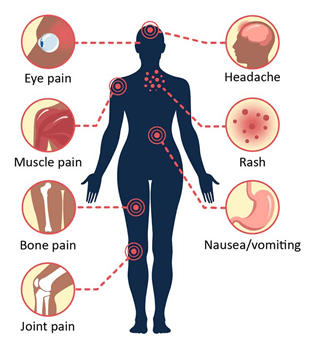
Figure 2: A body map of symptoms. Courtesy of the CDC.
Now, how is climate change making the problem worse? The main issue is the expansion of the habitat range of the mosquitos that act as a transmission vector for the virus that causes the disease. All mosquitos favor hot, wet areas for breeding, thus the population of mosquitos, including the Aedes mosquitos that carry Dengue and multiple other diseases, will occur in much greater numbers where these conditions will occur. Figure 1 demonstrates the potential future range at risk for the disease spreading. Climate change is warming the Earth via the greenhouse effect. This increased warmth will expand the range of mosquitos into regions that are currently more temperate or dry in climate. Areas most at risk of future spread include: central China, southern Japan, the Congo Basin and Great Rift Valley in central and east Africa, northern Australia, central South America, and the southeast of the United States[1]. Conversely, there will be a slight decrease in mosquitos in some areas of Africa’s Sahel region, due to moisture depletion from desertification removing these mosquitos preferred breeding grounds.
[1] If you would like a more detailed explanation of the mosquito spread in this region, please check out my colleague Shannon’s blog titled “Health: The Migration of Mosquitos in North America”
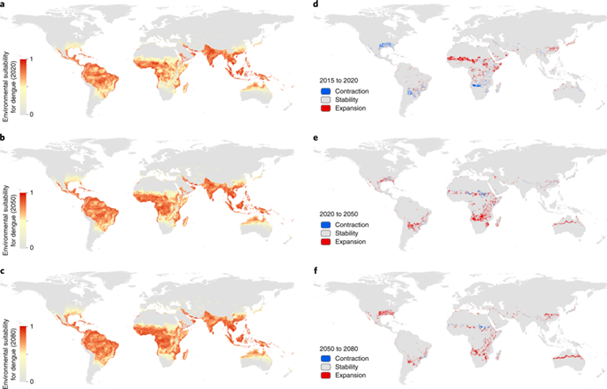
Figure 1: A map of potential spread of the mosquitos that carry the Dengue Fever virus. Courtesy of nature.com.
What can be done to prevent Dengue Fever from occurring and, when it does occur, to limit the potential damage it does to those infected and the society around them? Several steps can be taken to minimize the risk of spread. Firstly, we want to stop it from spreading as much as is feasible. Reducing greenhouse gas emissions to curb the climate change warming trend would be a long-term solution to minimize some future spread. However, there is still a guarantee of warming form what has been emitted already and will be emitted in the near future. Reduction of mosquito breeding habitats, whether through drainage of areas with standing water, widespread application of mosquito targeting pesticides, or introduction of genetically modified mosquitoes to sterilize the wild population, would be the primary way to root out the disease before it can start infecting people. If the disease carrying mosquitos become established in the area and the disease starts to spread, it will become more difficult to root out this disease. People will have to change some of their habits, such as wearing mosquito repellant sprays more often. An increase in funding towards the healthcare system will be needed to prevent fatalities from the severe form of the disease. This disease is viral, so no true cure or treatment exists directly. However, preventative vaccines do exist, and those would need to become more widespread and frequently used as the range of the disease increases. A major note with healthcare: according to the WHO, regulation of internal fluid levels is critical in cases of severe Dengue, reducing the fatality rate from around 20% without treatment, to just 1% with it.
In conclusion, Dengue Fever is just one of many infectious diseases whose spread is expanding as result of the expansion of the range of its transmission vectors. The disease, which has signifact potential to be severe, or even fatal if left untreated. Several steps will need to be taken to ensure both that the disease will spread as little as possible, and to ensure that where it does spread, they will be prepared for it.
Information References:
https://www.who.int/news-room/fact-sheets/detail/dengue-and-severe-dengue
https://www.cdc.gov/dengue/statistics-maps/index.html
https://www.cdc.gov/dengue/symptoms/index.html
Image Sources:
Figure 1: https://www.nature.com/articles/s41564-019-0476-8
Figure 2: https://www.cdc.gov/dengue/symptoms/index.html
 Global Climate Change and Society