I know that in these blogs I’ve talked about mental health and psychology frequently and that these topics are very difficult to read or understand but it is such an important topic in today’s society that it needs to be heard. I also understand that this blog is for any topic related to climate change and I have free range to write about anything of the sorts I please. But nevertheless I just want to stress how important this topic is and to raise awareness to these things because after doing all this research and trying to find credible sources, I realize just how much some people understand, and how a lot of people just brush it off like it is nothing. In fact, it is not nothing; it is something very important that we all need to understand.
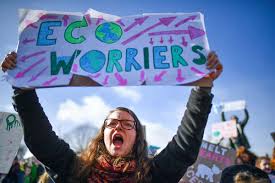
Climate change related natural disasters have a negative impact on the mental health of survivors of these events. Suicide rates have increased as well as anxiety, depression, PTSD, stress, and grief. But climate anxiety isn’t just experienced by the ones that have seen some traumatizing stuff in their lives; It affects everyone.
Rising global temperatures cause a lot of issues. We know this already. We know that people are having many problems relating to this physically and some have to rely on others just to survive, but what about the mental point of view? It has been said that higher temperatures alone have led to more suicides and increased psychiatric hospitalization which takes a toll on your mental health.
The American Psychological Association wrote:
“When you think about climate change, mental health might not be the first thing that comes to mind. Americans are beginning to grow familiar with climate change and its health impacts: worsening asthma and allergies; heat-related stress; food-borne, waterborne, and vector-borne diseases; illness and injury related to storms; and floods and droughts. However, the connections with mental health are not often part of the discussion. It is time to expand information and action on climate and health, including mental health. The health, economic, political, and environmental implications of climate change affect[s] all of us. The tolls on our mental health are far reaching. They include stress, depression, and anxiety; strain social and community relationships; and have been linked to increases in aggression, violence, and crime. Children and communities with few resources to deal with the impacts of climate change are those most impacted. To compound the issue, the psychological responces to climate change, such as conflict avoidance, fatalism, fear, helplessness, and resignation are growing. These responses are keeping us, and our nation, from properly addressing the core causes of and solutions for our changing climate, and from building and supporting psychological resiliency.”
They created a 69 page pamphlet to help health providers understand health problems related to climate change. Most of the information I provide in this blog will come from this informational PDF. The mental health impacts of climate change starts on page 20 and begins with impacts on individuals, then moves to impacts on the community and society.
“Much like the planet, people have a tipping point” -Emma Beddington
Watching the slow impacts of climate change unfold and worrying about the future of yourself, your family, and those around you is a term called Climate Anxiety (others may call it “Ecoanxiety”). It has been proven that some people are deeply affected by their inability to feel that they are making a difference in the changing of the world and stopping Climate Change. Any linked problem with climate change (i.e. natural disasters, poverty, species extinction) can affect us emotionally, especially risk prone areas. This includes communities where people’s lives are directly tied to agriculture, fishing, tourism, etc. An example of this is the residents of Isle de Jean Charles, Louisiana. They became the first climate refugees in the United States (according to the 69 page pamphlet written by the American Psychological Association but the Dust Bowl of the 1930s in my opinion would be considered the first). This was a geographically vulnerable area that was hit with hard flooding causing $48 million in damage. (add more to this).
Denialism
Despite the enormous amount of evidence the denial of climate change continues. This is one of the main reasons for climate anxiety in the United States. The Trump Administration has blocked a congressional testimony warning about climate change. He suppressed peer reviewed government funded studies on its effects and fired a scientist who refused to alter reports to downplay its human causes. The Testimony referenced work done by NASA and NOAA. It shows an outline of two dozen ways that climate is linked to stresses in society. The Testimony also notes that 18 of the past 20 years have ranked the warmest on record. The white house proposed to eliminate all of these references.
How to help
- Build trust in others.
- Building trust is the first step to trying to get help. Find someone you can trust and talk to them about it and have them try to get you help or have them help you themselves.
- Find something more positive to think about when you feel down.
- Studies have found that when you are feeling down and are alone its best to try and think of something else to distract yourself until you can talk to that trusted person the next time you see them.
- Self regulation
- Make a daily routine and stick with it. Get up at a certain time, eat meals at the same time everyday, talk to people, write down your feelings and ideas towards your climate anxiety. This will not only help with your mental health but it will keep you physically healthy too and keep you from getting ill.
- Talk with your community about having a climate plan
- Plan to have things like a group recycling day, have a disaster plan, volunteer to help other communities stay healthy, turn your lights out at a specific time every night to waste less electricity.
These are just a few of the many things you can do to keep these thoughts away if you are having this issue. Help is out there and they are aware of the issue. They will get you through this. Hang in there friends!
Sources:
Beddington, Emma. “A-Z Of Climate Anxiety: How to Avoid Meltdown.” The Guardian, Guardian News and Media, 8 Dec. 2019, www.theguardian.com/environment/2019/dec/08/a-z-of-climate-anxiety-how-to-avoid-meltdown.
Juliet Eilperin, Josh Dawsey. “White House Blocked Intelligence Agency’s Written Testimony Calling Climate Change ‘Possibly Catastrophic’.” The Washington Post, WP Company, 8 June 2019, www.washingtonpost.com/climate-environment/2019/06/08/white-house-blocked-intelligence-aides-written-testimony-saying-human-caused-climate-change-could-be-possibly-catastrophic/.
Mental Health and Our Changing Climate- pdf https://www.apa.org/news/press/releases/2017/03/mental-health-climate.pdf
 Global Climate Change and Society