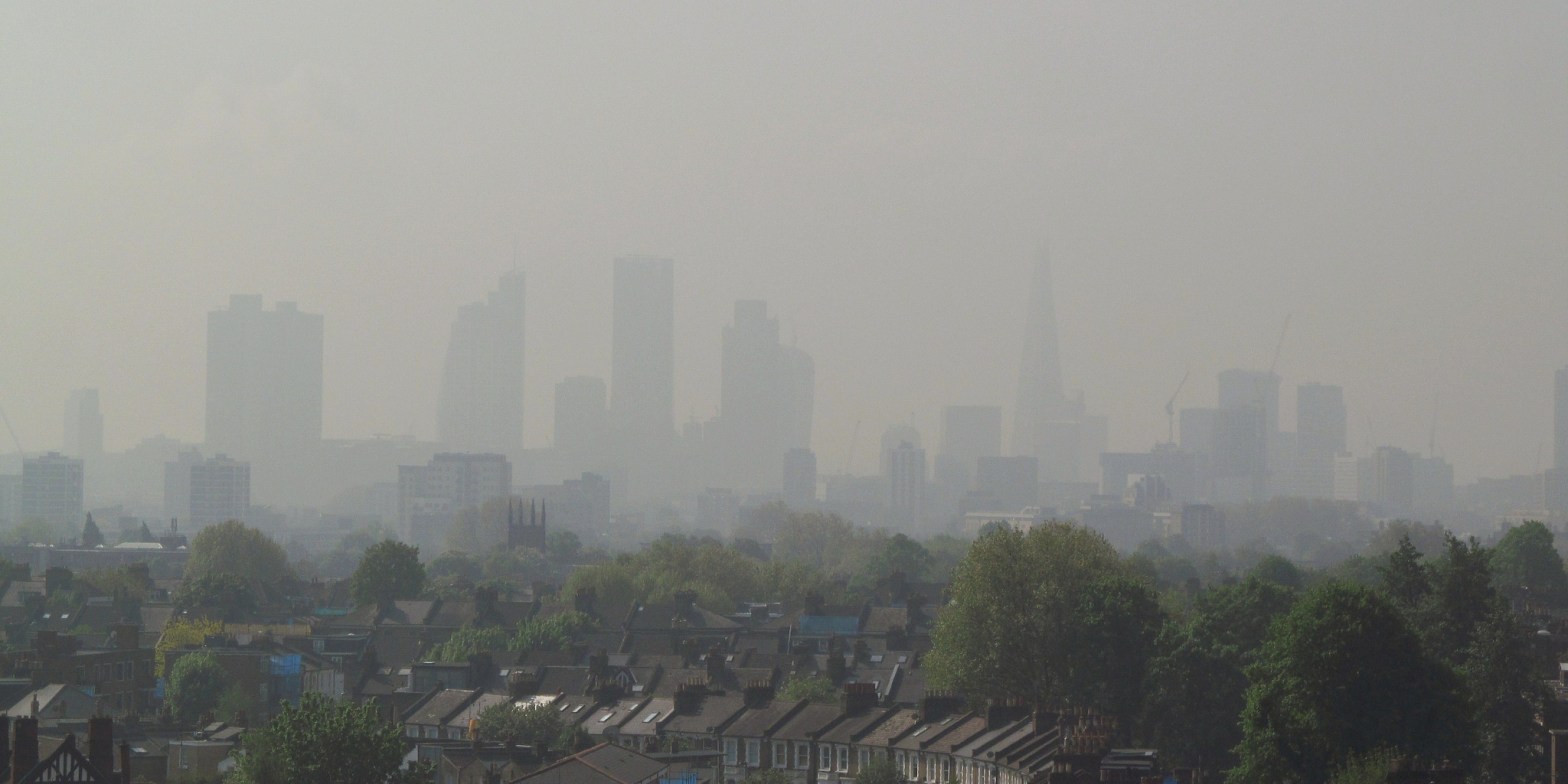
“Carbon dioxide is good for the Earth; it will make it greener!” is an argument that is made abundantly when the topic of climate change is brought up and discussed. Yes, carbon dioxide is necessary to many ecosystems, species, the atmosphere, photosynthesis, etc. We need this compound in order to balance many global aspects. However, too much carbon dioxide is destructive to every element mentioned above. This concept is similar to someone and the time they allot to watching TV. Dedicating a small portion of your day to watching programs on television is healthy, as the wide variety of content can be used to relax and/or learn something new. Nonetheless, too much TV time is not healthy, because the observer is not engaging in activity that will benefit their physical health for that extended period of time. Back to carbon dioxide: the same general idea applies here. Throughout this blog, I will address greenhouse gases, the impacts of too much carbon dioxide, and how we can make better choices that would contribute to a decrease in levels of CO2.
The Greenhouse Effect
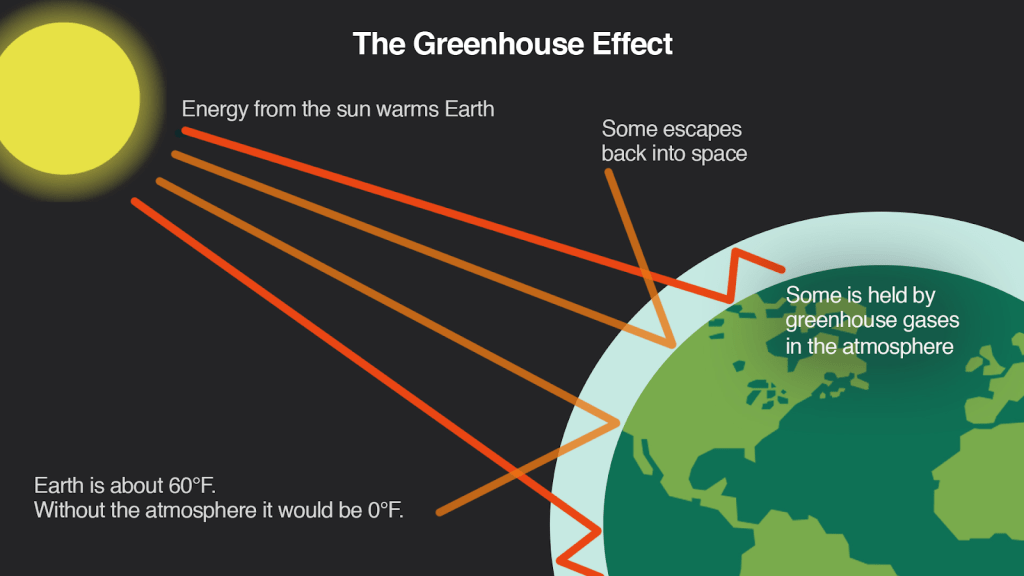
Greenhouse gases and the greenhouse effect are both important principles to Earth’s radiative balance and climate change. The major greenhouse gases are as follows: carbon dioxide, nitrous oxide, methane, and water vapor. These gases work as a system, similar to that of a greenhouse, and trap heat, rather than allowing it to escape back into the atmosphere. The heat that is trapped is retained at a level that is close to Earth’s surface and allows for the sustainability of life to be maintained on Earth. Without the greenhouse effect, Earth would be too cold to support life (click here to view an animated graphic of the process of the greenhouse effect).
The Problem
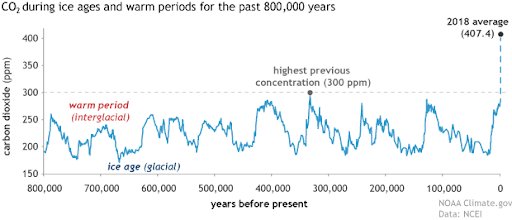
The gases that make up the greenhouse effect are unfortunately out of balance, and scientists predict that they can change greatly. This will impact how and where humankind can survive on our planet as well as animals and ecosystems. Carbon dioxide emissions have been on the rise since the Industrial Revolution and is without a doubt the most abundant, threatening greenhouse gas within our atmosphere. As mentioned in the introduction, small amounts are necessary in many areas for Earth to thrive, but too much of this gas is dangerous. Statistically speaking, carbon dioxide is at its highest level ever recorded. In February 2020, the global average of carbon dioxide was recorded at 414 parts per million. Figure 2. visually represents the average amount of carbon emissions throughout each century. The trend seems to creep slightly higher throughout each century, until 2018 is reached; this is where emissions skyrocket astronomically. These statistics can be a result of burning fossil fuels and mass amounts of deforestation.
Impacts of Too Much Carbon Dioxide
The impacts of our atmosphere containing too much carbon dioxide ranges from environmental issues to health issues. Both of these concepts go hand-in-hand, as environmental issues can be the answer to many health issues. Below are just a few (of many) of the problems that can result from too much carbon dioxide:
Climate Change: A change in climate in general is known to be a response to our atmosphere containing high levels of carbon dioxide. As mentioned in my previous blogs, the temperature of Earth’s surface has been slowly on the incline for many years now (Click here for more information in the form of a graph and an animation). Additionally, scientists have not been able to present a model that mimics the numbers we are seeing without factoring in carbon emissions.
Acid Rain: Acid rain occurs when emissions released from the burning of fossil fuels combines with moisture within the air. As a result, the precipitation we receive has a high acid concentration. Another concept to keep in mind is that wind is the transportation mechanism for aerosols. Therefore, even if an individual does not live near the sources, wind is capable of displacing the acid across state borders, making it a problem for everyone. Acid rain is known to have impacts on forests, fish, insects, and a handful of resources used in construction. The acidic content causes paint to peel, steel to corrode, and stone to weather (Click here for more information).
Human Health: The displacement of oxygen in the air around us can undoubtedly hinder our health. Symptoms that may be experienced are headaches, dizziness, restlessness, difficulty breathing, and elevated blood pressure. Those with pre-existing respiratory issues such as asthma or cystic fibrosis are at more of a risk of developing further health issues due to the poor quality of air. I think it goes without saying, but any of these symptoms can worsen or lead to severe health conditions if not addressed in a timely manner. (Click here and go to the “Health Effects” tab to learn about levels of CO2 and potential health problems).
How do We do our Part?
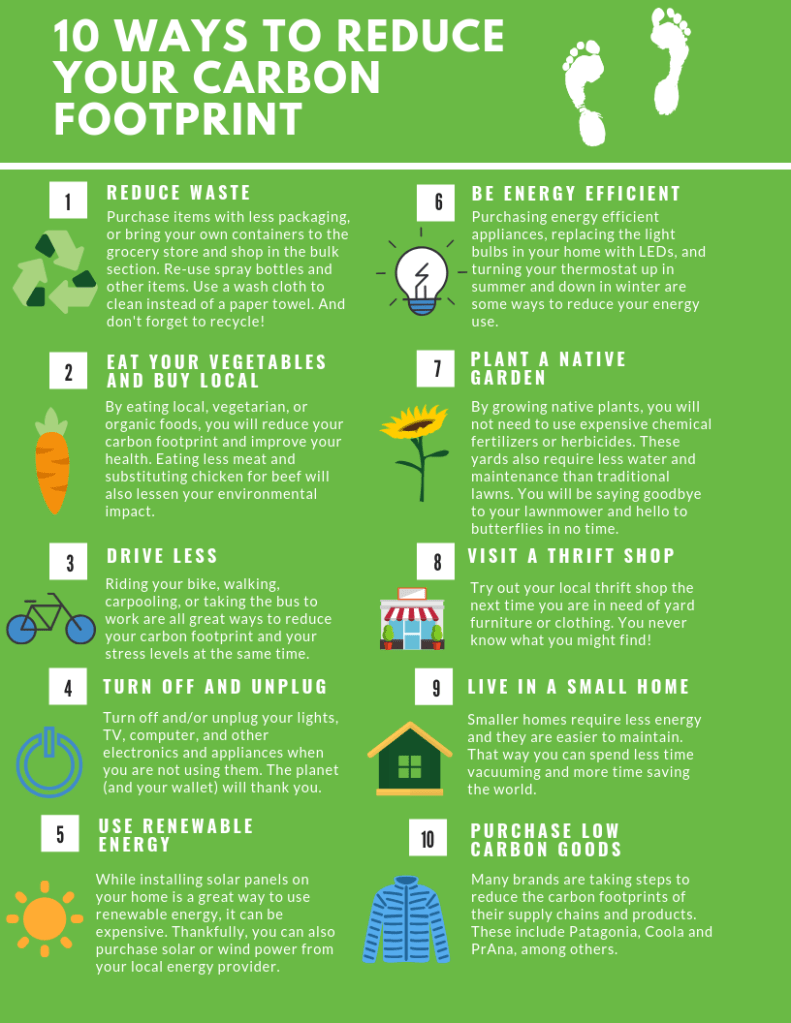
Now that we understand how bad high levels of carbon dioxide are for us and our environment, how do we take precautions and limit these tragedies from occurring? To be completely honest, most solutions are adjustments that can be made to individuals’ lifestyles. Most of the suggested alterations will not only benefit the environment, but promote a healthier lifestyle as well. While most are stuck in a routine and are afraid of or uncomfortable with change, modifications are the only way to save and preserve our planet. Additionally, you may find that making these changes will improve your mental health, so please be optimistic while reviewing a few suggestions!
Driving/Transportation: Ride a bike for close range trips, especially if you live in more of an urban area. No carbon dioxide will be emitted during this trip. If that option is not available, try to take public transportation as much as possible. Think of how many passengers a bus can hold and imagine if everyone drove their own vehicle instead of boarding the bus! There would be a lot more traffic, resulting in a great deal of carbon dioxide emissions.
Home Energy: Turn off lights, televisions, and other appliances when they are not in use! Another energy-saving factor is the use of fluorescent or LED light bulbs. Try to prevent setting your thermostat too high or too low to avoid the excess work that needs to be done to cool off your home. Layer up when cold and open up some windows when hot.
Food: Eating local and organic is the best way to limit carbon emissions in this category. Carbon Offsets to Alleviate Poverty estimates that 13% of greenhouse gas emissions are due to the transportation of food and related necessities.
Final Thoughts
After reading this blog post and its various sources, I hope you understand that high levels of carbon dioxide are harmful to us as a society, our health, and our environment. This gas is necessary to surviving, as it is a key component within the processes of respiration and photosynthesis. But, just as many things in life, too much can be harmful. I encourage you to be mindful of the decisions you are making and how they impact our planet. Our world would be greener if we reduced our carbon emission levels and did our part!
Signing off
-Shannon
 Global Climate Change and Society
I found your post to be very engaging. I was aware that carbon dioxide was harmful, but not in all the ways described here.
LikeLike
Meghan,
I’m so glad you found your way to my blog post! I’m even more thrilled to hear that you enjoyed it and learned a few new things!
LikeLike
I really learned a lot from your latest blog post. The graphs and charts of explanations of the different topics were very informative and helpful to me. They are always talking about the greenhouse effect, I never knew what it was
until now. You explained it very well and now when I hear that term I know exactly what it means thanks to this blog. The topic on acid rain was also very informative to me and all of the effects it has. I know that certain creatures have become a lot less abundant over the years such as frogs and toads, I’m now wondering if this is part of the reason why from reading the information and graphs you provided on this topic. The carbon dioxide section also was very well done and gave a lot of good information on what we can all do to help. Thank you for this educational and informative post.
LikeLike
Thank you for reading and commenting on this post! I am glad that the visuals were helpful, and I’m even more pleased to hear that you learned about the greenhouse effect.
Your connection between acid rain, CO2 and less frogs and toads is a good point and one that I never thought of, but I do agree. Especially in our area. I have seen less and less toads.
LikeLike
I really enjoy graphs and such it helps understand. The carbon dioxide bit was very informative .
LikeLike
Missy,
Thank you for reading my blog post. I am glad you enjoyed the content, and I am glad to hear that the graphics were very helpful in your comprehension! Stay safe and healthy!
LikeLike